
Why Wooden Slabs Are the Ultimate Choice for Your Dining Table-Pack Universe
Why Wooden Slabs Are the Ultimate Choice for Your Dining Table
A dining table is more than a piece of furniture. It’s where conversations happen, memories are built, and everyday life comes together. While mass-produced tables may serve a function, they often lack personality and longevity.
That’s where wooden slab dining tables stand apart. Crafted from a single piece of natural hardwood, these tables combine raw beauty with long-term durability. For buyers exploring premium wood materials such as solid slabs and live-edge surfaces, options available under Pack Wood showcase how natural wood can elevate both residential and commercial interiors.
In this guide, we’ll break down why solid wood slab tables are becoming the preferred choice for homeowners, designers, and furniture manufacturers across the USA and Canada.
Why This Topic Matters Today
More buyers are moving away from disposable furniture and toward materials that offer:
-
Long-term value instead of short-term savings
-
Authentic, natural aesthetics
-
Sustainable sourcing and responsible craftsmanship
Wooden slab tables check all three boxes, especially when sourced from hardwood lumber suppliers focused on durability and quality.
The Rise of Wooden Slab Tables in Modern Interiors
1. A Stronger Connection to Natural Materials
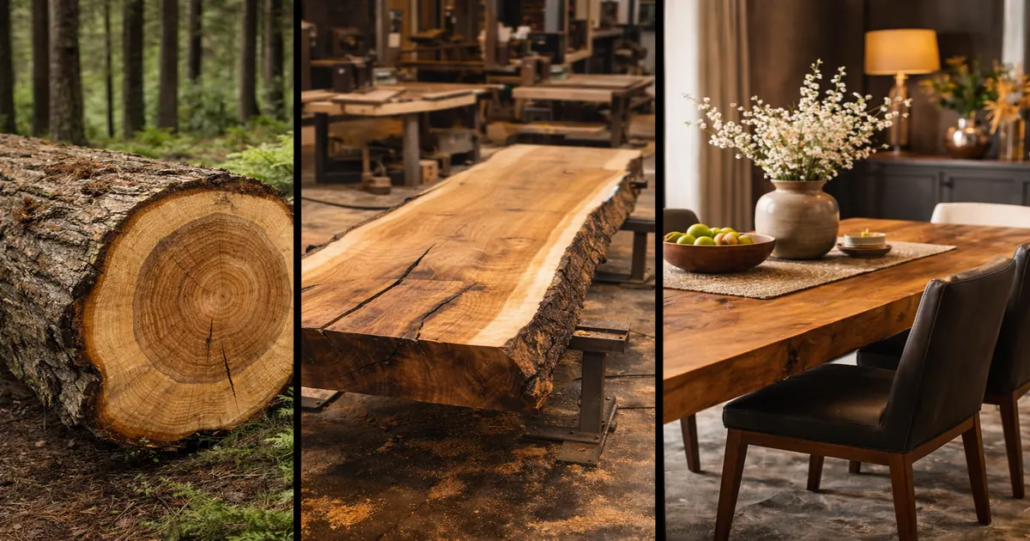
Interior design trends increasingly focus on bringing natural elements indoors. Wooden slab tables do this effortlessly. Each slab retains the tree’s original grain, knots, and live edges, creating a visual connection to nature that engineered materials simply can’t replicate.
This organic look adds warmth and balance to modern interiors that often rely on metal, glass, and concrete.
2. The Popularity of Epoxy “River” Tables
One of the most talked-about slab table designs today is the epoxy river table. Natural cracks or gaps between slabs are filled with resin, creating a flowing visual contrast between wood and color.
Beyond aesthetics, epoxy also reinforces structural integrity and stabilizes natural imperfections, making slab tables suitable for long-term use in both homes and professional spaces.
3. Industrial Bases for a Contemporary Edge
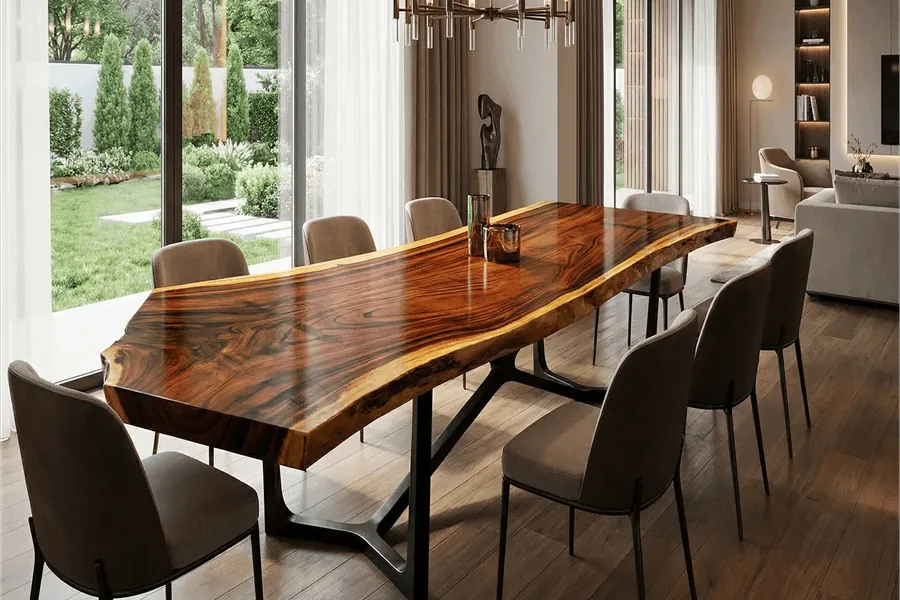
Wooden slabs are frequently paired with minimalist steel bases such as U-shaped or trapezoidal legs. The contrast between raw wood and clean metal lines creates a refined yet bold statement that works well in modern, industrial, and luxury interiors. These designs are often complemented by refined wood veneer finishes in coordinated furniture and cabinetry.
Wooden Slab Tables vs Conventional Tables
| Consideration | Wooden Slab Table | Standard Manufactured Table |
|---|---|---|
| Material | Solid hardwood slab | Veneer or engineered wood |
| Durability | Extremely high | Moderate |
| Repairability | Can be sanded and refinished | Often needs replacement |
| Appearance | One-of-a-kind grain & edges | Uniform, repeatable |
| Lifespan | Decades | Limited |
This comparison highlights why slab tables are often viewed as a long-term investment rather than a temporary furnishing.
Wooden Slab Dining Table
5 Reasons Wooden Slabs Are the Perfect Choice
1. Every Table Is Truly One of a Kind
No two wooden slabs are ever identical. Grain patterns, natural curves, and live edges ensure that each table has its own character. This uniqueness adds both emotional and aesthetic value that mass-produced furniture can’t offer.
2. Exceptional Strength and Durability
Slab tables are typically crafted from premium hardwoods such as walnut, oak, maple, or acacia. These species are widely used in hardwood lumber supply for furniture and construction due to their density, stability, and long-term performance.
For furniture makers and commercial buyers, this durability translates into fewer replacements and better lifecycle value.
3. Easy Restoration Over Time
Unlike synthetic or laminated surfaces, wooden slab tables age gracefully. Minor scratches or dents don’t ruin the piece. They can be sanded, refinished, and resealed to restore the original surface.
In many cases, the table actually gains character as it ages.
4. Design Versatility Across Styles
Wooden slab tables are not limited to rustic interiors. With the right finish and base, they can complement:
-
Contemporary homes
-
Industrial lofts
-
Luxury dining spaces
-
Commercial meeting rooms
This versatility makes slab tables a preferred option for designers and architects working across varied interior styles.
5. A More Sustainable Furniture Choice
Many slab tables are produced using reclaimed wood or responsibly sourced hardwood. By utilizing the natural form of the tree, waste is minimized compared to conventional lumber processing.
This approach aligns well with sustainable material sourcing goals in modern furniture and construction projects.
Case Study: A Custom Walnut Slab Table in a Professional Space
Custom furniture makers often highlight the complexity behind slab tables. In one documented project, a client commissioned a large walnut slab conference table for a professional setting.
The raw, kiln-dried walnut alone represented a significant investment. The process involved careful slab selection, precision flattening, structural reinforcement, and long-term stabilization techniques. The result was not just a table, but a functional architectural element that conveyed craftsmanship, stability, and premium quality.
This reinforces why sourcing the right wood materials is critical for long-lasting furniture applications.
Final Thoughts
A wooden slab dining table is not a trend driven by appearance alone. It represents a shift toward quality, longevity, and meaningful design. Built from solid hardwood and designed to last for decades, these tables offer a balance of beauty, strength, and sustainability.
If you’re sourcing premium wooden slabs or hardwood materials for custom furniture, hospitality projects, or bulk manufacturing across the USA and Canada, you can request a quote to explore availability and wholesale pricing.
Author
Written by the Pack Universe Supply team, specializing in premium wood, surface, and building materials for residential and commercial projects across the USA and Canada.

