Does Quartz Scratch? Does Granite Stain? 8 Questions Clients Ask — Answered Correctly
Does Quartz Scratch? Does Granite Stain? 8 Questions Clients Ask — Answered Correctly
The 8 most common granite and quartz questions — with the correct commercial answers, the myth that drives each one, and what gets specified wrong when the wrong answer sticks.
| Quick answer:
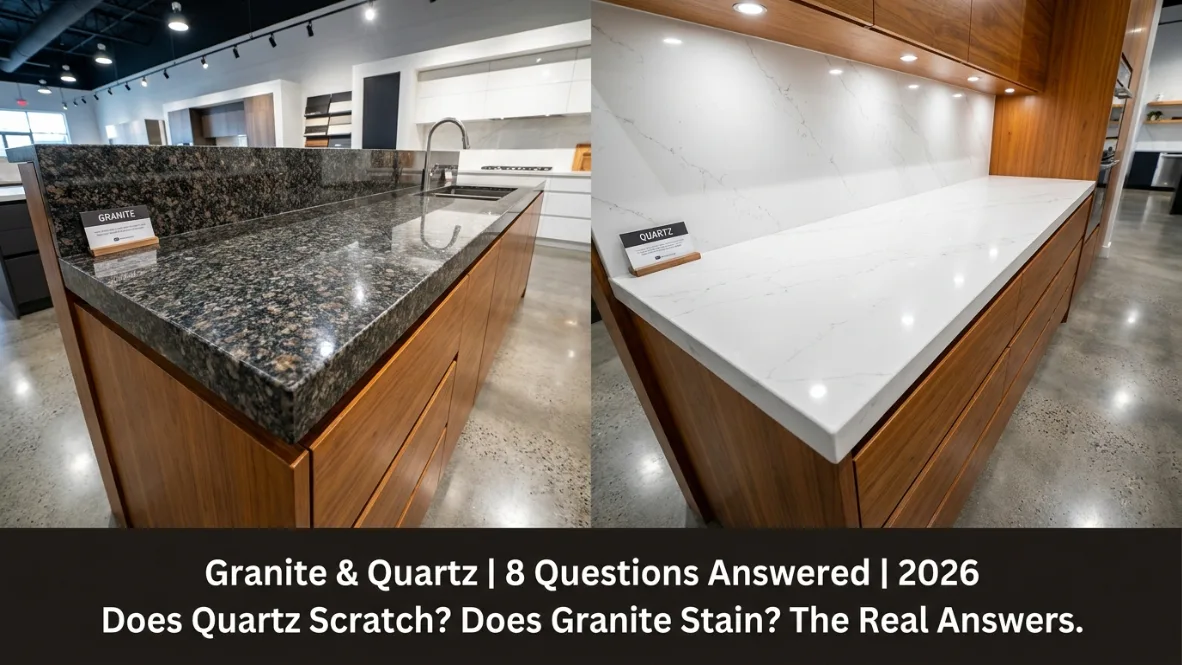
Neither quartz nor granite scratch under normal commercial use — both are harder than steel. Granite stains only if unsealed. Sealed granite does not stain from normal contact. Quartz does not scratch — but it scorches. One hot pan ends the surface permanently. This is the question nobody asks until it is too late. |
Why These Questions Cost Projects Money
Most wrong answers about granite and quartz come from residential design blogs, Pinterest, and manufacturer marketing. They follow the material into commercial specifications — and the wrong spec costs real money.
A contractor who specifies quartz in a commercial kitchen because ‘quartz is maintenance-free’ is right about maintenance and wrong about the application. The first hot pan corrects the specification at full replacement cost. A developer who avoids granite in a BTR development because ‘granite stains’ is working from residential horror stories about unsealed countertops — not commercial sealed granite that performs correctly for 30-50 years.
Below are the 8 questions that drive the most common specification errors. Each one has a myth behind it, a reality that replaces it, and the commercial consequence when the wrong answer stays in the brief.
| Data:
NAHB 2025 — the two most cited causes of commercial countertop warranty claims are: (1) quartz scorch damage in kitchen applications where heat was not flagged at specification, and (2) granite staining in applications where no sealing programme was confirmed at handover. Both are preventable specification conversations. |
The 8 Questions — Summary
| # | The Question | The Short Answer |
| 1 | Does quartz scratch? | No — Mohs 7, harder than steel. But the resin scorches. That is the real risk. |
| 2 | Does granite stain? | Only if unsealed. Sealed granite does not stain from normal commercial contact. |
| 3 | Is quartz maintenance-free? | Yes for sealing. No for heat — trivets are mandatory. One pan ends the surface. |
| 4 | Is granite too porous for kitchens? | No. Sealed granite is the correct commercial kitchen specification. Quartz is not — heat. |
| 5 | Does quartz look fake? | At close range — sometimes. In photography and normal use — not detectable. |
| 6 | Is granite old-fashioned? | No. It is the dominant commercial kitchen and outdoor surface specification in 2026. |
| 7 | Can you tell quartz from natural stone? | An experienced eye at close range: yes. A guest or tenant in normal use: usually no. |
| 8 | Is quartz always cheaper than granite? | No. Premium quartz costs more than standard granite. Grade determines price, not material type. |
Each question answered in full below — myth, reality, and where it goes wrong on a live project.
Q1 — Does Quartz Scratch?
| What clients believe:
Quartz scratches easily — it is not as hard as stone. |
| The reality:
Quartz has a Mohs hardness of 7 — slightly harder than granite at 6-7, and significantly harder than steel at 5.5. A steel knife run across quartz does not scratch the surface. It leaves a steel streak that wipes clean. The quartz is not damaged. Quartz will not scratch from any normal commercial use: knives, cookware, cleaning equipment, or commercial foot traffic on quartz-format tiles. |
The confusion comes from early-generation quartz products in the 1990s and early 2000s that had lower resin quality and did show surface abrasion. Current commercial quartz is significantly harder. The scratch concern is outdated.
| Where this goes wrong on site:
Where this goes wrong: a client who believes quartz scratches avoids it for a BTR kitchen and specifies granite instead — without asking whether the building’s maintenance programme supports annual granite sealing. The scratch myth drives a specification that creates a real maintenance problem. |
Q2 — Does Granite Stain?
| What clients believe:
Granite stains permanently — it is too porous for kitchens and bathrooms. |
| The reality:
Unsealed granite absorbs liquids. Sealed granite does not stain from normal commercial contact — coffee, wine, cooking oil, cleaning products. The porosity of commercial-grade granite is approximately 0.2 to 0.5%. Professional penetrating sealer fills these pores and reduces absorption to near-zero. A sealed granite kitchen counter in a commercial food service environment does not stain from routine cooking and cleaning. The staining stories come from unsealed residential granite or from installations where the sealing programme lapsed. |
The stain risk is real — for unsealed granite. It is not a material property of granite. It is a maintenance programme failure. Sealed correctly and re-sealed on schedule, granite is a stain-resistant commercial surface with a 30-50 year service life.
| Where this goes wrong on site:
Where this goes wrong: a developer specifies quartz for a hotel lobby reception desk because ‘granite stains’ — missing the fact that quartz has no sealing requirement but also no natural stone character, and the lobby aesthetic brief specifically required real stone. The myth drives an aesthetic downgrade that was not necessary. |
Q3 — Is Quartz Truly Maintenance-Free?
| What clients believe:
Quartz needs no maintenance at all — zero upkeep, nothing ever. |
| The reality:
Quartz requires no sealing — ever. The resin binder is fully non-porous. Quartz tolerates standard commercial cleaning products without degradation. Quartz does NOT tolerate heat above approximately 150°C. A hot pan from a commercial oven permanently scorches the resin surface. This damage cannot be repaired — the slab requires replacement. Quartz also degrades under prolonged UV exposure outdoors. Colours yellow within 2-3 years in direct sunlight. |
‘Maintenance-free’ is accurate for sealing and cleaning. It is not accurate for heat and UV. The trivets conversation must happen before quartz is specified in any kitchen or outdoor application — not after the first service.
| Where this goes wrong on site:
Where this goes wrong: quartz specified in a commercial kitchen because ‘it needs no maintenance.’ The maintenance saving is real. The heat damage is also real. The first week of commercial kitchen service demonstrates which variable matters more. Full slab replacement averages $800-$2,000 per counter. |
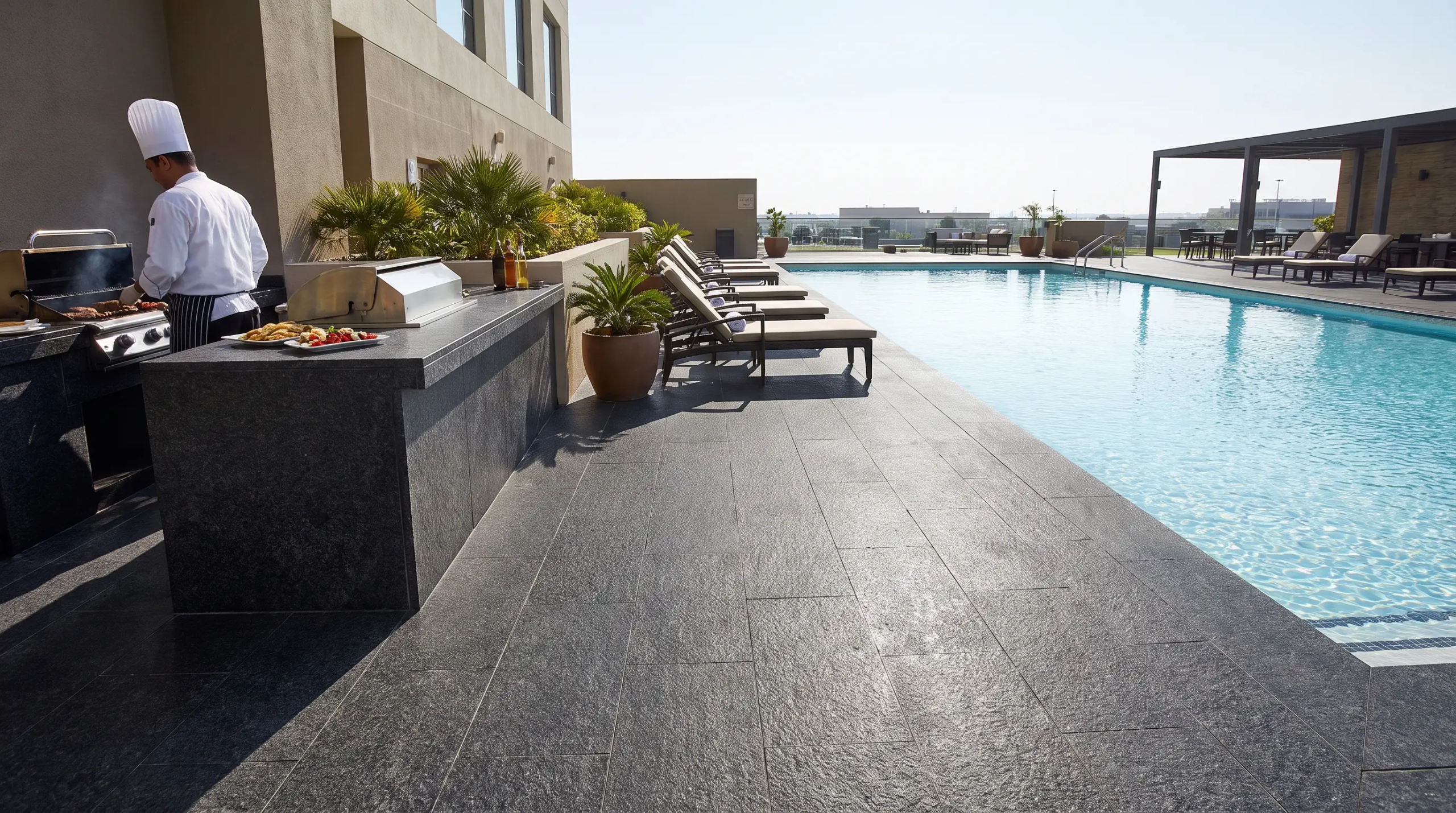
Q4 — Is Granite Too Porous for Commercial Kitchens?
| What clients believe:
Granite is too porous for food contact surfaces — health and hygiene risk. |
| The reality:
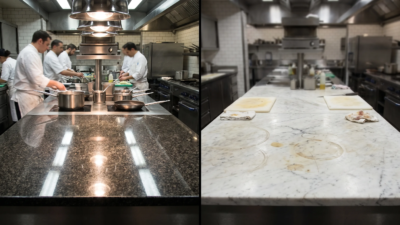
Sealed commercial-grade granite is approved for food contact surfaces across the USA under FDA food facility guidelines. It is the dominant natural stone specification for commercial kitchens. The porosity argument applies to unsealed granite. A properly sealed and maintained commercial kitchen granite counter is not porous in any meaningful food safety sense. Granite is the only countertop material that combines acid resistance, scratch resistance, heat resistance, and food-contact approval. Quartz matches the first two but fails on heat in commercial kitchen conditions. |
The ‘too porous’ claim is a residential concern about granite installed without a sealing programme. In a commercial kitchen with a confirmed 6-monthly sealing schedule, it does not apply.
| Where this goes wrong on site:
Where this goes wrong: a restaurant owner avoids granite for the pass and prep counters based on hygiene concerns, specifies quartz, and discovers the heat limitation when the first commercial pan scorch happens. The hygiene concern was addressable with sealing. The heat damage is not addressable at all. |
Q5 — Does Quartz Look Fake?
| What clients believe:
You can always tell quartz from real stone — it looks obviously manufactured. |
| The reality:
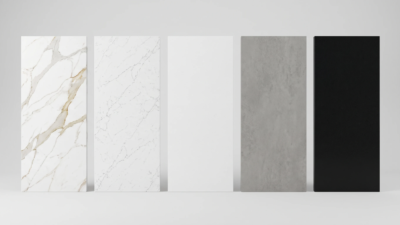
At close inspection by an experienced stone specifier: yes, premium quartz and natural stone are distinguishable. Quartz has a pattern that repeats across slabs. Natural stone does not. In marketing photography and normal room use: the best current Calacatta-look and Carrara-look quartz products are not immediately distinguishable from natural stone by a non-specialist. The distinction matters for: luxury hotel guests who look closely, high-end residential clients with stone experience, and applications where geological uniqueness is part of the brief. It does not matter for: BTR tenants, standard hotel guests, corporate office occupants, and retail customers who see the surface as background, not focal point. |
The question is not whether quartz looks fake. It is whether the people in the space will look closely enough to notice — and whether that matters for the project’s value proposition.
| Where this goes wrong on site:
Where this goes wrong: a developer specifies quartz for a boutique hotel lobby to save on maintenance, the design consultant approves the sample in isolation, and at handover the hotel owner notices the pattern repetition across the feature wall and flags it as a specification failure. The distinction was detectable. The conversation did not happen before the order. |
Q6 — Is Granite Old-Fashioned?
| What clients believe:
Granite is dated — quartz is what modern projects use. |
| The reality:
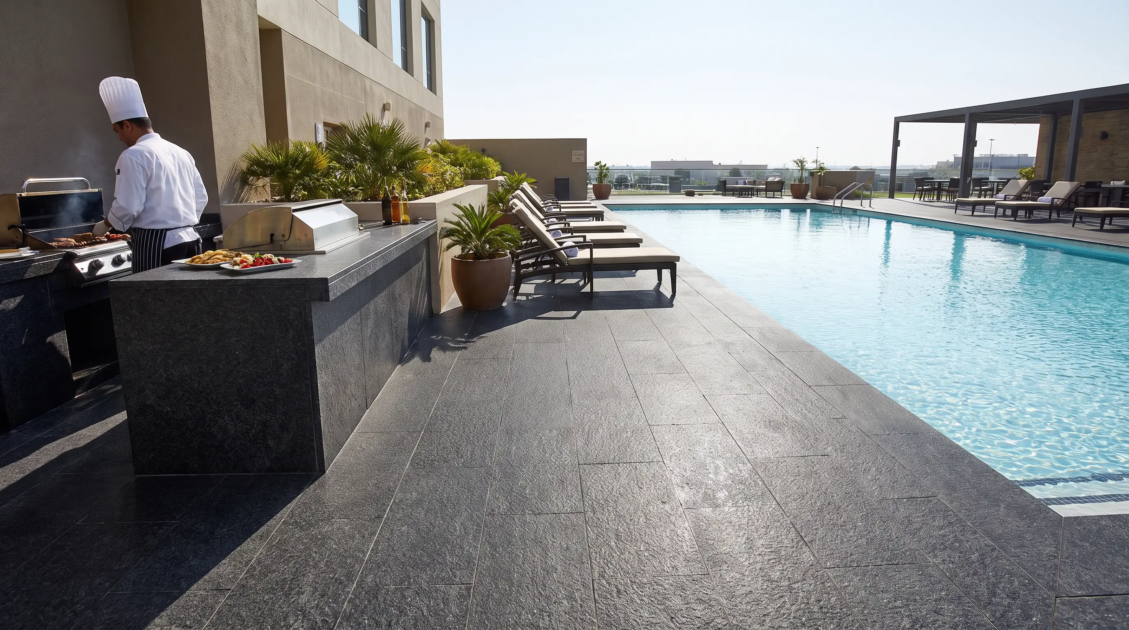
Granite is the dominant specification for commercial kitchens, restaurant bars, hotel lobbies, and outdoor surfaces in the USA in 2026. Its market share in food service applications has not declined. The ‘granite is dated’ perception comes from early 2000s residential kitchen trends — brown-and-beige granite with ornate edge profiles and dark cabinetry. That aesthetic is dated. The material is not. Current commercial granite specifications — absolute black, Kashmir white, premium quartzite — read as contemporary. The material’s geological character is the design element that no engineered surface replicates. |
Granite lost ground in residential countertops to quartz between 2010 and 2020. In commercial applications — kitchens, bars, lobbies, outdoor — it remained the dominant specification. Those are different markets with different performance requirements.
| Where this goes wrong on site:
Where this goes wrong: a developer’s interior consultant recommends quartz throughout a hotel because ‘granite looks dated,’ including in the commercial kitchen. The lobby specification is a design preference. The kitchen specification is a heat resistance failure. |
Q7 — Can You Actually Tell Quartz from Natural Stone?
| What clients believe:
Modern quartz is identical to natural stone — nobody can tell the difference. |
| The reality:
At normal viewing distance, in normal lighting, for a non-specialist: the best quartz products are not immediately distinguishable from their natural stone equivalents. At close range — 12 inches or less — an experienced eye can identify: pattern repetition across slabs (quartz), printed vein character vs geological formation (quartz vs real stone), and the slightly plastic quality of the resin surface under raking light. Photography cannot distinguish them reliably. Marketing renders, brochure photography, and online listings for quartz and natural stone look identical at standard web resolution. |
This matters most for boutique hotel and luxury residential applications where the material premium is the point. If the client is paying for natural stone character, deliver natural stone. If they are paying for low maintenance and consistent colour, quartz is the correct answer — and it does not need to pretend to be something else.
| Where this goes wrong on site:
Where this goes wrong: a contractor substitutes quartz for natural quartzite on a luxury BTR project mid-build to recover cost, correctly assuming most residents will not notice. The developer does notice at handover, recognises the substitution, and the conversation becomes a contract dispute rather than a material approval. |
Q8 — Is Quartz Always Cheaper Than Granite?
| What clients believe:
Quartz is the budget option — granite is more expensive. |
| The reality:
Standard granite (Level 1) costs less per sqft than premium quartz at wholesale. Premium quartz (Calacatta-look, veined finishes, large-format) costs more per sqft than standard and mid-grade granite. Level 3 and select commercial granite costs significantly more than standard quartz. The price relationship depends entirely on grade. Material type alone does not determine cost. |
The ‘quartz is cheaper’ assumption leads to specification decisions made on the wrong premise. A project budget built on ‘we will use quartz because it costs less’ may be comparing the wrong grades.
- Level 1 granite wholesale Lower than most quartz options at same grade.
- Level 2 granite vs mid-range quartz Comparable pricing — grade determines cost, not material.
- Premium quartz (Calacatta-look, large format) Often higher than Level 2 granite at the same sqft.
- Level 3+ select granite Higher than standard quartz — correct for luxury applications.
Myth vs Reality — Full Reference Table
Every claim from this guide in one place.
| The Claim | True for Quartz? | True for Granite? |
| Does not scratch | Yes — Mohs 7 | Yes — Mohs 6-7 |
| Does not stain | Yes — non-porous | Yes — when sealed |
| Heat resistant | No — scorches above 150°C | Yes — no limit |
| Maintenance-free | Yes — no sealing | No — annual sealing required |
| UV stable outdoors | No — resin degrades | Yes — frost and UV resistant |
| Looks like natural stone | Close — not identical | It is natural stone |
| Cheaper than the alternative | Not always — premium quartz > standard granite | Not always — Level 3 granite > standard quartz |
| Best for commercial kitchens | No — heat rules it out | Yes — the correct specification |
Source: NSI material standards, ASTM testing, NAHB 2025, Pack Universe Supply commercial data June 2026.
| Specify Granite or Quartz for Your Project — Get a Confirmed Wholesale Quote:
Pack Universe Supply stocks commercial granite and quartz in all grades from Charleston, SC. -> Request a Quote: packuniversesupply.com/request-a-quote -> Call USA: +1 704-951-7822 | Canada: +1 (647) 362-1907 |
| Bottom line:
Neither granite nor quartz fails from normal commercial use. Both scratch-resistant, both stain-resistant when correctly specified. The real differences: quartz fails from heat and UV — two conditions that are common in commercial kitchens and outdoor surfaces. Granite requires sealing — a maintenance programme that must be confirmed before the order is placed. Every wrong specification in this guide comes from treating a residential concern as a commercial fact. The material conversation is different in commercial projects. These 8 answers are where it starts. |
Sources & References
NSI — Natural Stone Institute (naturalstoneinstitute.org) | NAHB 2025 (nahb.org) | ASTM material testing standards | Pack Universe Supply commercial order data, June 2026.