What Is a Leathered Stone Finish — and When Should Contractors Specify It? [2026]
What Is a Leathered Stone Finish — and When Should Contractors Specify It? [2026]
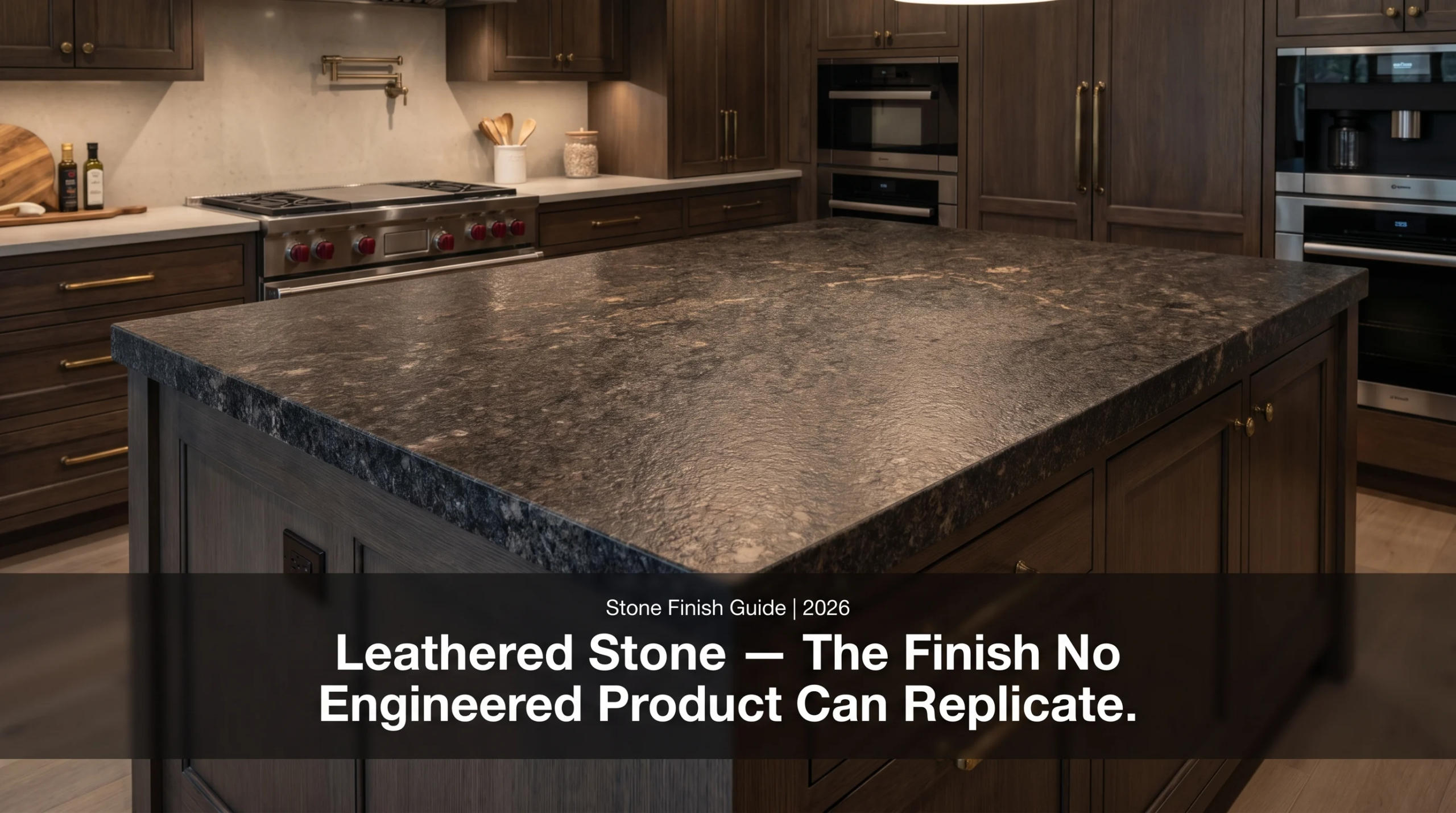
The 2026 complete contractor’s guide to leathered stone finish – what leathering is, how it’s made, why no engineered alternative can match it, a 9-factor finish comparison table including polished, honed, leathered and brushed, the stone types that leather best, the maintenance implications and the applications where leathered finish is the right specification. Data from NSI and MIA+BSI throughout.
What is leathered stone? When should contractors specify leathered stone?
The leathered finish is achieved by running diamond-tipped brushes over an honed stone surface, exposing the stone’s natural crystalline texture with a subtle sheen. The outcome is a warm, matte-like surface that feels distinctly natural to the touch and to the foot. It is specified for high end residential kitchen islands, luxury bathroom feature counters, boutique hospitality surfaces and anywhere the design brief requires the most unique stone character possible. The leathered finish is the one stone finish that no engineered alternative can mimic.
| When a leathered finish is the right option:
Luxury Residential Kitchen Island: The 2026 signature premium residential kitchen specification for clients who want their granite or quartzite to be undeniably natural. Bathroom feature counter, premium: Leathered stone brings a spa-like tactile quality to a bathroom vanity that polished and honed finishes can’t replicate. Boutique hospitality feature surface: Bar tops, reception counters and spa reception surfaces where the brand aesthetic favors natural texture over uniform sheen. If a client on any project asks ‘what’s different about this’ – the answer is leathered granite or quartzite, which is visually and tactilely different from any engineered alternative. Granite and quartzite in leathered finish available to order at Pack Universe Supply – wholesale contractor pricing, confirmed finish before shipping. Request a Quote Call +1 704-951-7822 | packuniversesupply.com |
What sets luxury residential projects apart from premium projects is a leathered stone finish, and it’s the one finish that no quartz or engineered surface can match.
In most conversations between contractors and clients about stone finishes, two options are discussed: polished and honed. Refined for drama & color depth. Designed for matte warmth and organic character. Third choice is Leathered, rarely seen in showrooms, rarely on supplier default lists but increasingly specified in the high-end residential and boutique hospitality market because it offers a surface character no other finish and no other material can achieve.
According to NKBA 2025 luxury residential specification data, leathered stone finish specifications in projects with a sale value of more than USD 800,000 increased 34 percent between 2020 and 2025, driven by designers and buyers looking for a premium finish that separates a natural stone surface from the engineered options available at all price points. This guide explains what leathering is, which stones give the best results, and the maintenance and specification considerations contractors need to understand before recommending it.
- What Is Leathered Surface? How Is It Made?
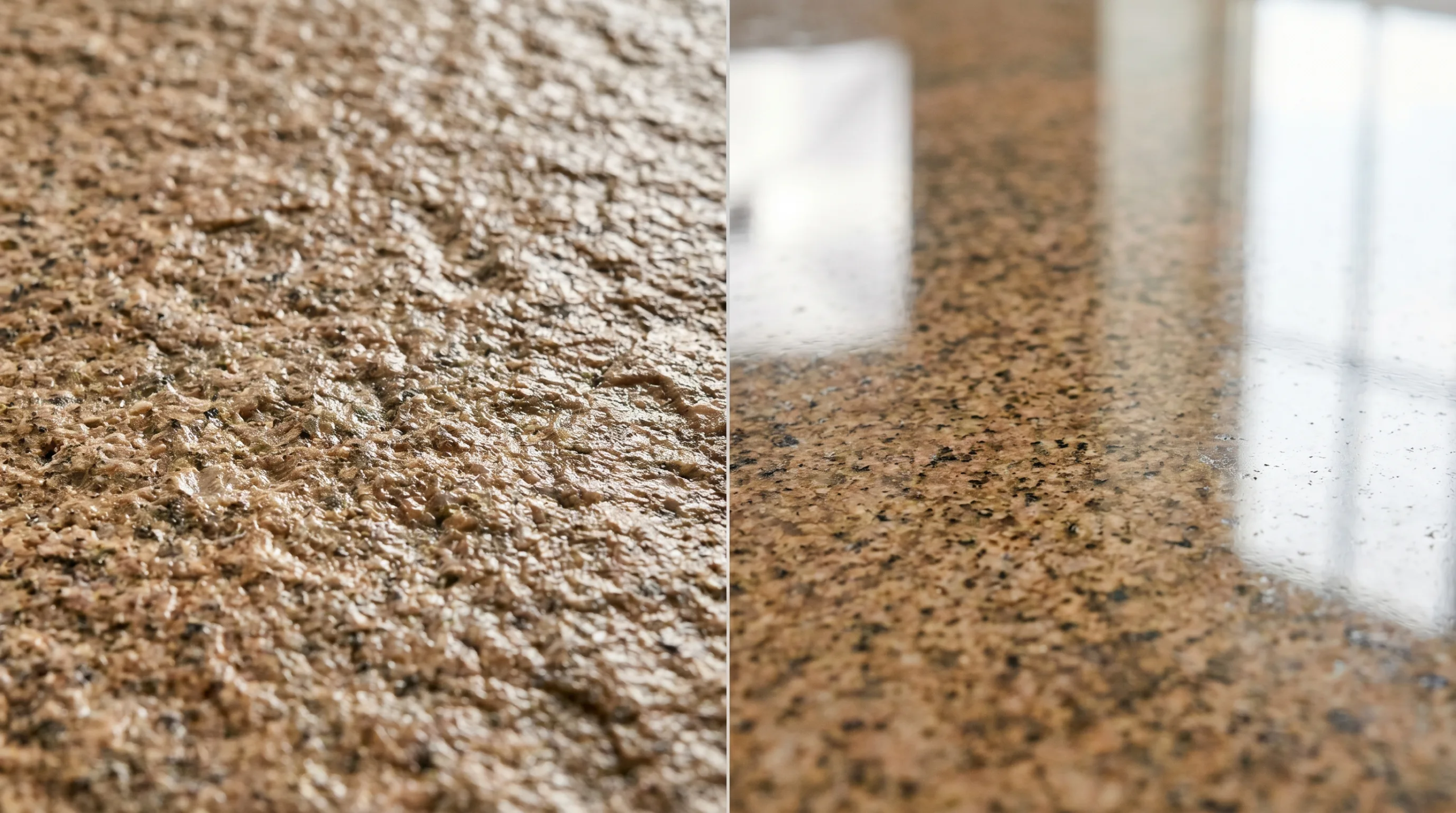
A leathered finish is created by moving diamond tipped brushes at high speed over an honed stone surface. The brushes abrade the crystal tips of the stone’s surface, opening up the natural texture without removing a significant amount of material.
The process starts with an honed slab — a stone surface that has been ground to a flat matte finish by mechanical abrasion. After that, the leathering machine runs diamond-tipped wire brushes repeatedly across the honed surface. The brushes pick up the crystalline peaks of the surface structure of the stone, and break them down a little – a texture that follows the natural mineral character of the stone. This gives a surface that’s not a flat matte like honed stone anymore but textured as the stone’s geological formation is directly reflected.
The signature subtle luster of leathered stone comes from the polish left behind in the crystal valleys – the diamond brushes scuff the peaks but leave the recesses relatively smooth. This produces a matte surface and a luminous surface in raking light, two qualities that polished and honed finishes cannot achieve simultaneously. Each leathered piece is truly unique due to the texture, as the pattern of crystal peaks on the surface is as unique as the mineral formation of the stone.
| Short answer:
Leathered Finish Definition: A stone surface treatment created by running diamond-tipped brushes across an honed slab, opening the stone’s natural crystalline texture to produce a tactile, warm, matte-sheen surface. The process is similar to the natural formation of minerals in stone and makes each leathered surface unique. That’s an impossible feat for any engineered stone product. |
| Industry Data:
NKBA 2025 (nkba.org) — The specifications for leathered stone finishes in luxury residential projects over $800,000 in sale value increased 34 percent from 2020 to 2025. Designers say the failure of engineered alternatives to match the texture of leather is the key specification driver. NSI (naturalstoneinstitute.org) — leathered finish requires specialized fabrication equipment and expertise. Not every fabricator will do a leathered finish. Before specifying a leathered finish for any project, confirm fabricator capability. |
| The one thing to keep in mind:
But one stone finish that quartz or engineered surface just can’t convincingly replicate? Leathered. Its texture is the mineral formation of the stone itself, it cannot be printed, manufactured or simulated. If the design brief calls for a surface that is undeniably natural stone, the specification is leathered finish. |
Blow is the full 9 factor finish comparison table comparing leathered against polished, honed and brushed across every factor that matters for specification:
Leathered vs Polished, Honed and Brushed – The Full Comparison
Nine compared factors—one of which is the factor in which the leathered finish is absolutely better than all of the other finishes. The ability to distinguish natural stone from any engineered alternative.
What’s different from Quartz? row is the most important for specification conversations at the luxury residential and boutique hospitality tier. In most viewing conditions, polished quartz is virtually indistinguishable from polished natural stone. Leathered stone is immediately recognizable as not an engineered product – the texture is tactile, unique and obviously natural.
| Factor | Polished | Honed | Leathered | Brushed |
| Surface appearance | High-gloss mirror-like — maximum colour depth and reflection | Matte flat — no reflection, soft appearance | Textured matte with slight sheen — stone surface crystalline texture visible | Soft texture between honed and leathered — slightly open surface |
| Tactile character | Smooth and glass-like — no surface texture | Smooth and flat — no texture, no sheen | Clearly textured — the stone’s natural crystal structure felt underfoot and in hand | Slightly textured — softer than leathered, rougher than honed |
| Fingerprint visibility | Highest — dark polished stone shows handling marks clearly | Medium — matte surface diffuses marks | Lowest — texture conceals fingerprints and daily marks best of all finishes | Low — similar to leathered, slightly more visible |
| Scratch visibility | Most visible — polished surface reflects fine scratches | Less visible — matte diffuses light around scratches | Very low — texture conceals surface scratches effectively | Low — similar to leathered |
| Stain resistance | Best — smooth closed surface resists liquid penetration | Good when sealed — more porous than polished | Good — texture hides marks but surface slightly more open | Good — similar to honed stain profile |
| Sealing frequency | Annual commercial — most resistant finish | 6–12 months commercial — more porous | Annual commercial — similar to polished | Annual commercial — similar to honed |
| Fabrication cost | Standard — lowest cost finish | Moderate — additional honing process | Higher — specialist diamond brushing equipment required | Moderate-higher — similar to leathered process |
| Distinguishes from quartz? | No — quartz replicates polished stone effectively | Partially — honed quartz exists but less common | YES — no quartz or engineered product replicates leathered texture | Partially — brushed quartz exists but uncommon |
| Best application | Commercial standard, hotel bathrooms, standard residential | Spa, wellness, contemporary residential, matte-brief hospitality | Luxury residential kitchen islands, premium bathrooms, boutique hospitality feature surfaces | Premium residential, boutique hospitality — softer natural character than leathered |
| Short answer:
A leathered finish is better at hiding fingerprints and surface scratches than a polished or honed finish — the texture scatters light over everyday surface marks rather than reflecting them. On dark granites and quartzites where polished finish shows every fingerprint clearly, leathered finish is the specification that keeps the surface looking clean in between cleans. The luxury client who has opted for a polished dark granite kitchen island and is now wiping it down three times a day because every handprint pops in the LED downlighting was not told about the leathered finish ahead of the order. Leathered dark granite, in the same application, requires the same frequency of cleaning as any countertop, but does not show the evidence of every touch in between cleans. |
- Best Types of Stone for Leather.
Not all stones will give the same leathered finish – a stone’s mineral structure, crystal size and surface hardness all affect the quality of the finish.
| Stone Type | Leather Quality | Character and Best Application |
| Granite — speckled | Excellent | The texture of the crystal structure becomes clearly tactile. Speckle pattern reads as organic and natural. Kitchen islands, feature counters, bar tops. |
| Granite — veined | Very good | Veining remains visible through the texture. More complex visual character than speckled granite. Premium residential feature surfaces. |
| Quartzite | Outstanding | Quartzite’s naturally layered mineral structure creates the most distinctive leathered texture of any stone type. The surface feels genuinely geological. Luxury residential and boutique hospitality. |
| Marble | Good with caution | Marble can be leathered but requires careful sealing programme — the more open textured surface is more susceptible to acid etching from bathroom products. Only specify leathered marble where maintenance programme is confirmed. |
| Limestone | Moderate | Softer stone — leathering works but surface is more porous than granite or quartzite. Requires more frequent sealing. Best in low-moisture applications. |
| Porcelain | Poor | Porcelain can be given a textured surface but the process does not replicate natural stone leathering. The result looks manufactured rather than natural — defeats the purpose of specifying leathered finish. |
| Short answer:
Of all the types of stone, quartzite provides contractors with the most unique leathered finish. The naturally layered mineral structure gives a surface texture that feels truly geological. Granite is a great stone for a leathered finish. Marble can be leathered but it is more susceptible to acid etching so it requires a confirmed maintenance programme. |
Why Quartzite is the Best Stone for Leather
Quartzite’s mineral structure, naturally occurring layered silica crystals that form under intense geologic pressure, produces a leathered surface that is more visually complex and more tactilely distinctive than any other type of stone. The diamond brushing process exposes the layers of the quartzite’s formation in a manner that directly reflects the geologic history of the stone. There’s nothing like running your hand across leathered quartzite compared to any other countertop surface, including leathered granite. If your clients are in the luxury residential or boutique hospitality tier and want a surface that says material quality without the need for explanation, then leathered quartzite is the specification.
The client, who walks into a showroom and runs his hand across a leathered quartzite sample for the first time, has, most likely, made his specification decision in about three seconds. The texture is the work that no spec sheet, no mood board, no digital render can do. “It’s the best sales tool in a stone showroom — and most showrooms don’t have it.
Right now, specifying leathered stone for a project?
Tell us stone type, finish preference and project application and we’ll confirm availability of leathered finish and provide you with a confirmed wholesale quote within 2 business hours.
+1 704-951-7822 | packuniversesupply.com/request-quote
When to Use a Leathered Finish — And When Not To
The Leathered finish is the right specification for luxury residential feature surfaces, boutique hospitality counters and any application where the client specifically wants a surface that is unmistakably natural stone. It is not the proper specification for commercial food service, hotel bathrooms or any application where ease of cleaning is the primary maintenance concern.
When to Specify Leathered Finish:
- Luxury residential kitchen island: #1 application for leathered finish. The texture makes the island an object, not just a working surface.
- Bathroom vanity feature: The leathered stone on a bathroom vanity adds a spa-like tactile quality. Specify granite or quartzite, not marble unless maintenance is confirmed.
- Boutique hotel bar top or reception counter: Leathered stone on a guest-facing surface conveys natural material quality that no smooth finish can match.
- Any project where the client asks what makes this stone special: Leathered finish is the answer – it’s visually and tactilely unlike any engineered alternative.
- Outdoor feature surface—granite or quartzite only Granite and quartzite (leathered) may be used outdoors. The texture is naturally gripy, no flaming needed. Check that the stone type is suitable for exterior use.
Do Not Specify Leathered Finish When:
- Commercial food service or food contact areas: The textured surface is harder to clean to commercial hygiene standards than polished stone. Cleaned in the food service areas.
- Hotel bathrooms, standard or mid-range tier: Housekeeping requires a flat, fast surface to clean quickly. Leathered finish is not suitable for high-turnover hotel bathroom vanities.
- Where the client will not carry on with the sealing programme. Any application. Leathered finish requires the same sealing frequency as honed stone-annual for residential, 6 monthly for commercial. Specify before confirming.
- Applications Fabricator Capability Unknown Leathered finish requires specialist equipment. Before specifying leathered, make sure the fabricator has the appropriate equipment and experience.
|
⚠ Real Risk – Real Consequence:
The risk is to specify a leathered finish only to find that the fabricator doesn’t have the diamond brushing equipment to do it properly. The result: the fabricator either rejects the order, produces a poor result with inadequate equipment, or applies a brushed finish without notifying the contractor. Check fabricator capability prior to specifying leathered on any project. |
| Short answer:
Always confirm that the fabricator has diamond brushing equipment and experience with the specific stone type before specifying leathered finish on any project. Not all fabricators provide a leathered finish. A fabricator trying leathered finish with insufficient equipment produces a patchy result that does not give the surface character required by the brief. |

- Maintenance – What Clients Should Know before Accepting a Leathered Specification
- Leathered stone is maintained the same as honed stone, sealed professionally once a year for residential and every 6 months for commercial. And there are specific cleaning instructions that are different from polished stone care.
- Leathered stone has a textured surface and is slightly more porous than polished stone — similar to honed in porosity profile. It then needs to be sealed regularly by a pro to keep it from staining. It also needs to be cleaned with pH neutral cleaners, and not with multi-surface sprays that are acidic and can etch the surface texture of the stone after a period of time.
- Leathered versus polished leathered has a maintenance advantage in the daily appearance — the textured surface hides fingerprints, minor marks and surface residue that polished stone reflects clearly. In most home settings, leathered stone will maintain its appearance longer between professional cleanings and sealings than polished stone. This benefit must be weighed against the slightly more involved cleaning regime required — mild soap and water, not spray-and-wipe commercial cleaners.
- Sealing frequency: Annual Residential minimum. Commercial or high-use residential applications. Every 6 months
- Cleaning Products: pH neutral stone cleaner or mild soap and water Do not use acidic cleaning solutions as they may eat away the texture over a period of time.
- Grout and joint cleaning: The textured surface can trap kitchen residue in areas of heavy use around the oven hob and sink. A soft brush with pH-neutral cleaner removes this without damaging the texture.
- Damage repair – Fine scratches on leathered stone are less visible than on polished stone. If the damage is significant you will need to have it refinished by a professional stone restorer with leathering equipment.
- Leathered stone needs less detailed maintenance instructions than honed marble. Both need sealing every year. Marble, as an acidic product, will not etch leathered granite or quartzite. The conversation around maintaining leathered granite is this: seal it once a year, clean it with pH neutral products and between cleans don’t sweat the fingerprints.
| Short answer:
Leathered stone maintenance summary: professional sealing once per year. Only neutral pH cleaning products. No acid sprayers. The texture naturally hides fingerprints and small marks. Maintenance is like honed stone — no more than polished stone, and far less than marble when used in bathrooms. Leathered Stone orders from Pack Universe Supply: Pack Universe Supply carries leathered granite and quartzite from our wholesale warehouse in Charleston, SC. Can be ordered with confirmed finish spec before shipping. Leathered Finish Orders: We verify the appropriateness of the specific stone type for leathering. We provide physical samples of the leathered surface from confirmed lots prior to shipment of full volume orders. We provide guidance on fabricator requirements for the leathering process. For contractors new to specifying leathered finish: Call us before placing your order and we will walk you through the fabrication and maintenance considerations for the specific project application. Call: +1 704-951-7822 |
| Order Wholesale Granite and Quartzite in Leathered Finish — No Minimum First Order:
Granite and quartzite in leathered finish — confirmed finish, physical sample from confirmed lot, nationwide delivery. Charleston SC (USA) | Burlington ON (Canada) | Nationwide delivery.
→ Request a Quote: packuniversesupply.com/request-a-quote → Call: +1 704-951-7822 (Mon–Fri, 8am–5pm EST) → Canada: +1 (647) 362-1907 | WhatsApp: button at packuniversesupply.com |
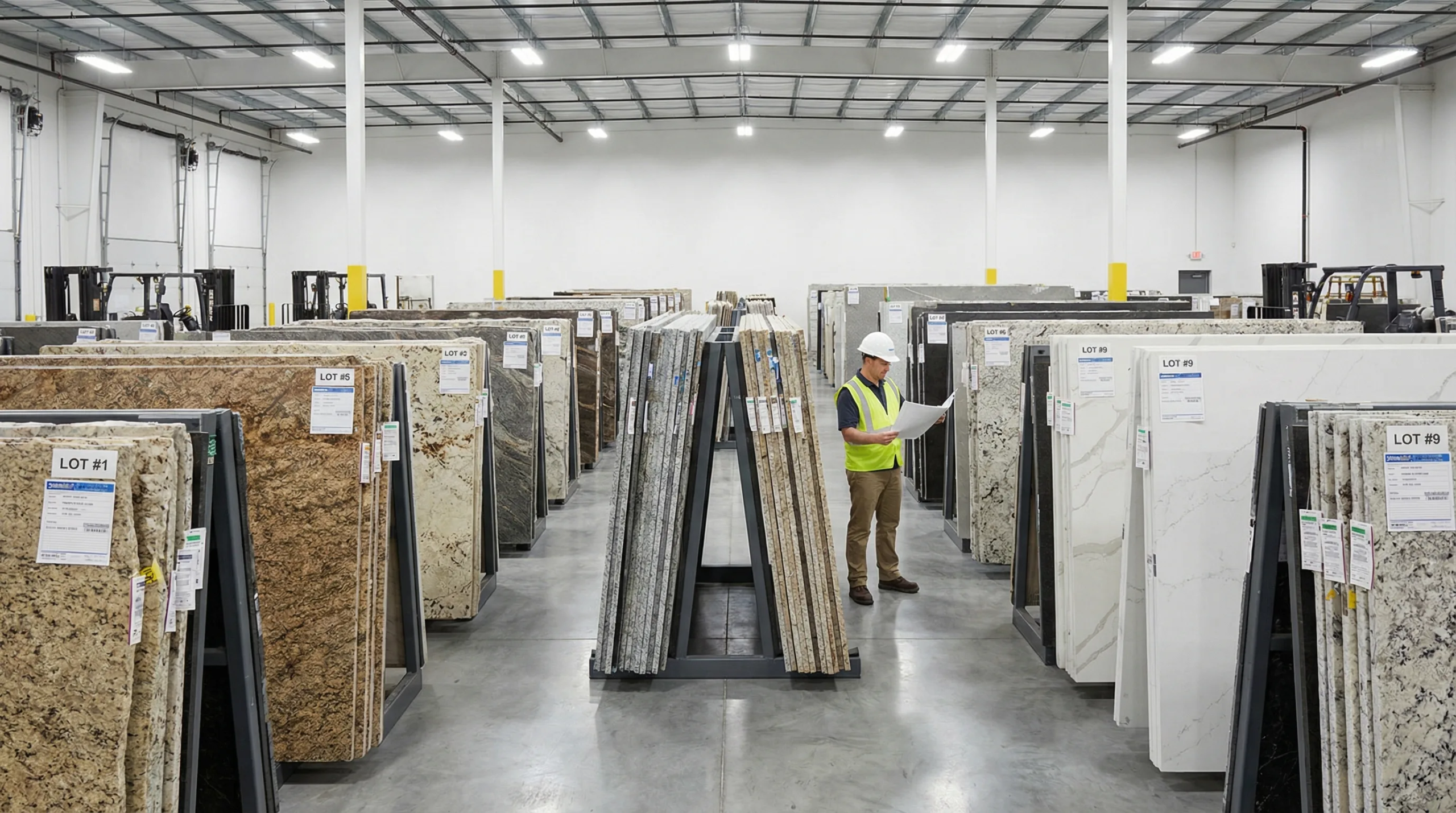
Verdict – What Is Leathered Stone Finish and When Should Contractors Specify It?
Conclusion:
Leathered stone finish is the specification for luxury residential kitchen islands, premium bathroom feature counters and boutique hospitality surfaces where the design brief requires a surface that is distinctly natural stone and distinctly different from any engineered alternative. It’s the one finish that even no quartz or composite product can imitate.
The most characteristic leathered result is given by quartzites. Granite works out just fine. Leathered Marble available if a maintenance schedule is agreed. The leathered surface is coloured by the stone type — and not just colour.
The two confirmations before any leathered specification are that the fabricator has diamond brushing equipment and experience with the specific stone type and that the client or building owner understands the annual sealing and pH-neutral cleaning requirements. Both are confirmed prior to placing an order.
Leathered finish elicits more unsolicited positive client feedback than any other stone finish specification. It’s the finish that makes clients reach out and touch the stone before they read the spec sheet, and the one that generates the most referrals from luxury residential projects.
| Sources and References
NKBA — National Kitchen & Bath Association, Luxury Specification Survey 2025: nkba.org | NSI — Natural Stone Institute, Surface Finish Guidelines: naturalstoneinstitute.org | MIA+BSI Fabrication Standards 2025 | Pack Universe Supply spec data, April 2026 |
About the Author
Sam Michaele with 15 years of direct experience providing granite and quartzite in leathered finish to luxury residential and boutique hospitality projects across the USA and Canada, [Your Name] is well-versed in the industry. Pack Universe Supply has wholesale warehouses in Charleston, SC (USA) and Burlington, ON (Canada).