2026 Countertop Trends in the USA: What Builders & Designers Are Choosing
2026 Countertop Trends in the USA: What Builders & Designers Are Choosing
The complete contractor and developer guide to material choices, finish preferences, and colour shifts reshaping the US countertop market in 2026.
| What countertop materials are US builders and designers choosing in 2026?
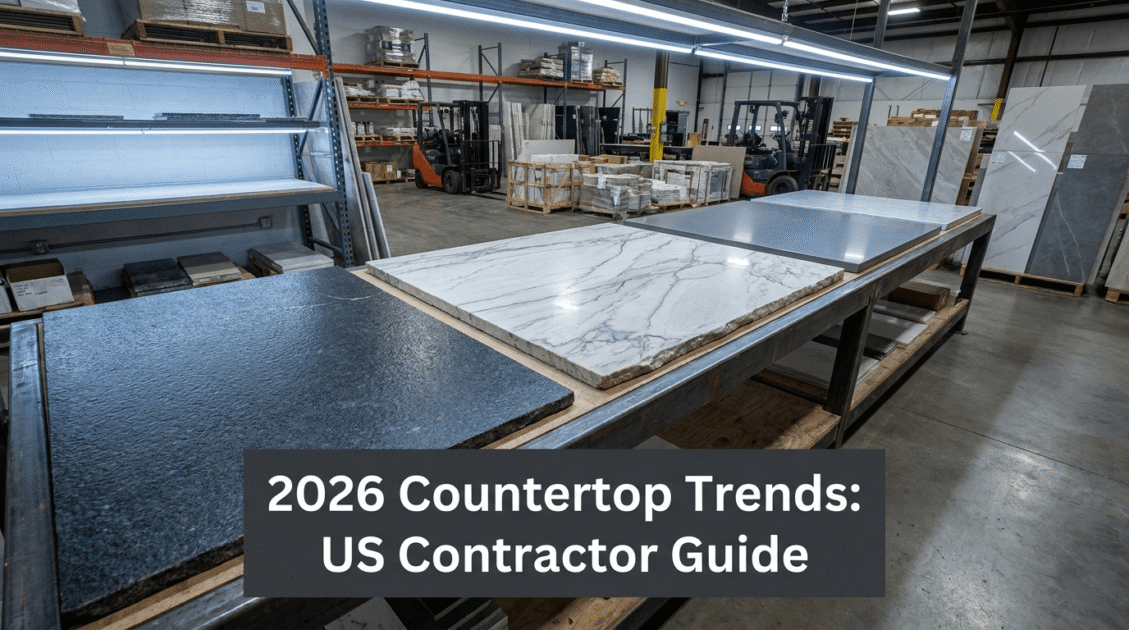
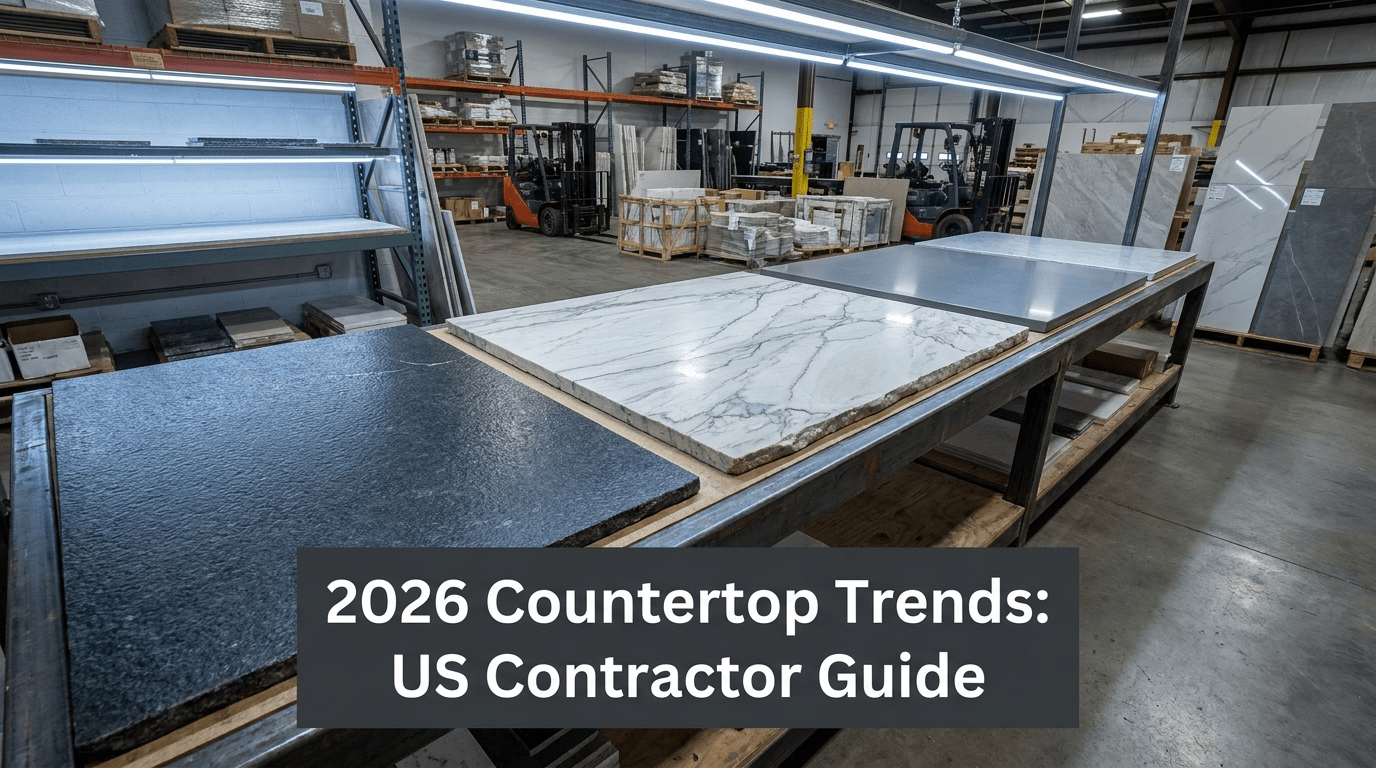
Quartz remains the dominant commercial and residential specification in 2026, but the fastest-growing trend is a shift toward natural stone aesthetics — particularly leathered granite, quartzite, and textured porcelain slabs that mimic stone. The all-white countertop has peaked; designers are now moving toward warm neutrals, vein-forward surfaces, and matte finishes. The 6 defining countertop trends in 2026: • Quartz still leads volume — But designers are moving toward natural stone looks within the quartz category. • Leathered granite rising — Textured matte surface finishes replacing polished across commercial and hospitality. • Quartzite gaining ground — Specified where clients want marble aesthetics with stronger performance. • Warm neutrals dominating — Greiges, taupes, and soft creams replacing cool greys and stark whites. • Porcelain slab acceleration — Large-format porcelain increasingly specified for both countertops and cladding. • Sustainability entering specs — Recycled content and regional sourcing now appearing in commercial RFPs.
Pack Universe Supply | Charleston SC & Burlington ON | +1 704-951-7822 |
The US countertop market in 2026 looks different from 2023 — not dramatically, but in ways that matter at the specification stage.
The all-white quartz countertop that dominated commercial and residential projects for a decade has peaked. Designers are moving toward warmer tones, textured finishes, and natural stone aesthetics — not because quartz is going away, but because the aesthetic exhaustion of identical white engineered surfaces has created real demand for differentiation. Leathered granite, quartzite, and large-format porcelain are the materials absorbing that demand.
This guide is built for contractors, builders, and developers who need to understand where the US market is heading before they commit to a material specification. Every trend in this guide is grounded in industry survey data and real purchasing patterns — not interior design editorial. If you supply commercial projects, hospitality developments, or multi-unit residential, this is where your clients are heading.
- The 2026 US Countertop Market at a Glance
Quartz holds the largest market share by volume, but the fastest growth is happening in textured natural stone and large-format porcelain — materials that combine the look of natural stone with improved performance characteristics.
Market share data from NKBA and NAHB surveys consistently shows engineered quartz as the volume leader — approximately 35% of US countertop specifications in 2026. But volume leadership and growth leadership are different metrics. Quartz is stabilising, not growing. The categories growing fastest are the ones that address two things quartz cannot: genuine natural stone character and textured surface finishes.
| INDUSTRY DATA — NKBA (National Kitchen & Bath Association)
The NKBA 2025 Design Trends Report found that 68% of designers surveyed reported clients requesting “natural stone looks” in 2025-2026 projects — up from 54% in 2023. Quartzite and leathered granite were the two most commonly named specifications among respondents who had moved away from standard polished quartz. Source: nkba.org — 2025 Professional Design Trends Report |
The market share trend table below shows how the major countertop material categories are shifting between 2024 and 2026.
| Material / Finish | 2024 Share | 2026 Share | Direction | Primary Driver |
| Engineered Quartz | 38% | 35% | ↘ Stabilising | Volume leader; aesthetic fatigue in white |
| Leathered/Textured Granite | 9% | 16% | ↗ Strong growth | Hospitality + commercial demand |
| Quartzite | 6% | 11% | ↗ Fast growth | Marble look, stronger performance |
| Large-format Porcelain Slab | 8% | 13% | ↗ Accelerating | Cladding + countertop crossover |
| Polished Granite (standard) | 21% | 15% | ↘ Declining | Losing share to textured alternatives |
| Marble (commercial) | 7% | 7% | → Flat | Niche — high-end hospitality only |
| Recycled/Sustainable Surfaces | 3% | 6% | ↗ Growing | ESG + LEED project requirements |
| Solid Surface (Corian-type) | 8% | 7% | → Flat | Specification inertia; healthcare use |
| Quick answer: Engineered quartz remains the highest-volume US countertop specification in 2026 at approximately 35% market share — but leathered granite (+7 points) and quartzite (+5 points) are the fastest-growing categories. |
The practical implication for contractors is this: the specification conversation with a commercial client or developer in 2026 will increasingly include materials that were peripheral five years ago. Having a working knowledge of quartzite grades, leathered granite finishes, and porcelain slab sizing is no longer a premium service — it is a basic competency for any contractor operating in design-conscious commercial markets.
Most of the specification conversations that surprised contractors in 2024 were just the 2026 standard arriving early.
- Leathered Granite and Textured Finishes — The Dominant Surface Shift
The single most significant surface finish shift in the 2026 US market is the move from polished to leathered and honed — across granite, quartzite, and even engineered quartz where manufacturers now offer textured options.
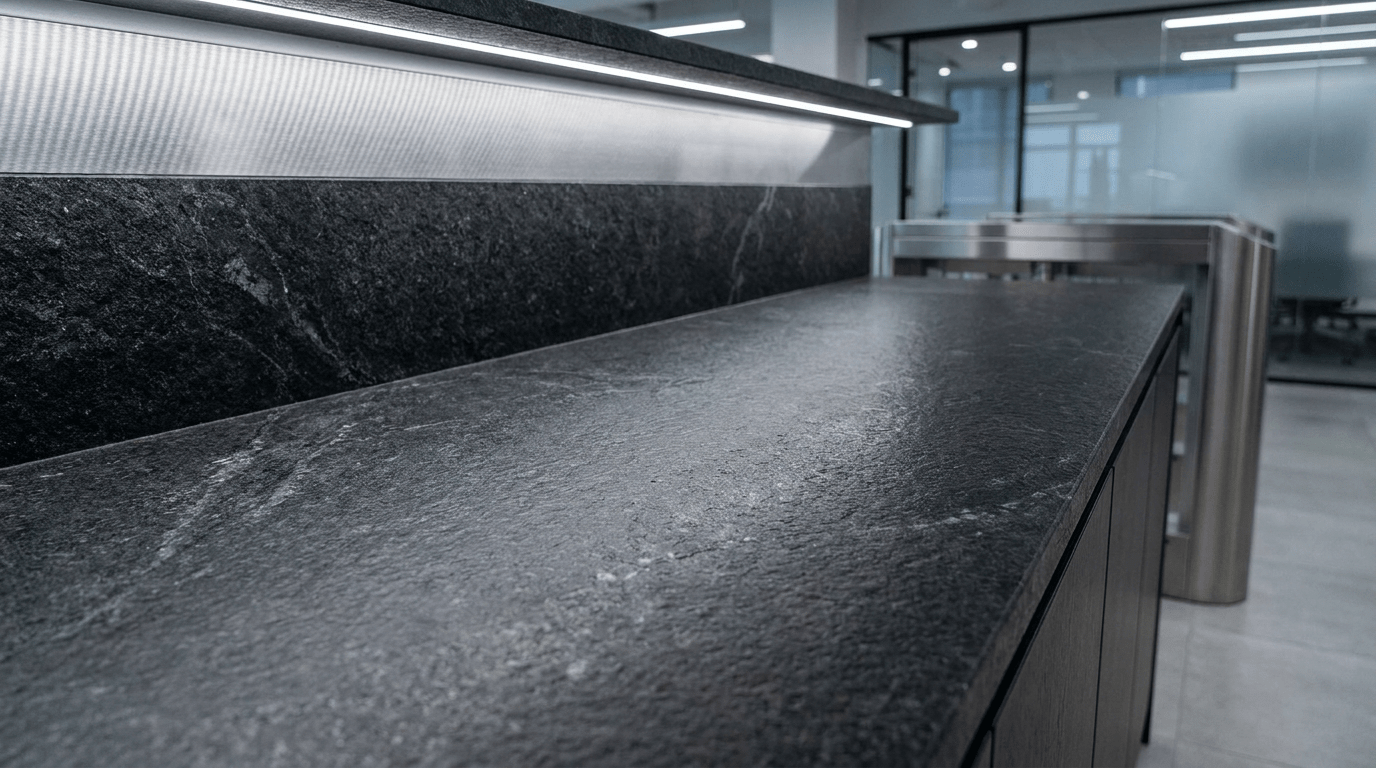
Leathered granite — produced by running a diamond-tipped brush across a honed surface to create a textured, slightly undulating matte finish — has moved from a premium niche specification to a mainstream commercial and hospitality choice. The reasons are practical as much as aesthetic: leathered surfaces hide fingerprints, minor scratches, and everyday wear significantly better than polished, reducing visible maintenance burden in high-traffic commercial environments.
| INDUSTRY DATA — CBRE (Commercial Real Estate Design Survey)
CBRE’s 2025 US Commercial Interior Design Survey found that leathered and honed stone finishes were specified in 41% of hospitality renovation projects completed in 2024-2025 — up from 22% in 2021-2022. Project managers cited lower visible maintenance burden and stronger design differentiation as the two primary reasons for the shift. Source: CBRE — 2025 US Commercial Interior Design Survey |
| Supplying a 2026 project and need trend-matched materials at wholesale?
Pack Universe Supply stocks leathered granite, quartzite, quartz, and large-format porcelain slabs for contractors and developers across the USA and Canada. We’ll match your spec to available stock before you commit. Call +1 704-951-7822 | packuniversesupply.com |
Why leathered is gaining over polished in commercial settings
In a hotel bar, restaurant, or high-traffic reception area, a polished granite surface shows every water mark, fingerprint, and surface scratch within hours of installation. A leathered surface of identical stone reads as clean even under active use — the textured finish diffuses light rather than reflecting it, which means imperfections simply do not register visually. For a facility manager responsible for daily appearance standards, this is a genuinely meaningful operational difference, not a design preference.
| Quick answer: Leathered granite finishes reduce visible surface marks and fingerprints by an estimated 60-70% compared to polished finishes on the same stone — a measurable operational advantage in commercial and hospitality environments. |
Honed finishes in residential and mixed-use
Honed stone — a flat matte finish without the textured dimension of leathered — is the other growing finish category. In multi-unit residential and mixed-use developments, honed white or near-white quartzite is increasingly specified as an alternative to polished quartz. It offers the clean, sophisticated look developers want without the reflective surface that reads as dated in 2026 interiors.
The finish preference comparison table below covers application fit, 2026 trend direction, and maintenance requirements.
| Finish Type | Best Application | 2026 Trend Status | Maintenance Level |
| Leathered (matte textured) | Hospitality, commercial bars, outdoor counters | Rising strongly | Low — hides wear and fingerprints |
| Honed (flat matte) | Hotel lobbies, reception desks, bathrooms | Stable growth | Moderate — needs sealing |
| Polished (high gloss) | Traditional residential, retail display | Declining | High — shows every mark |
| Brushed/Sandblasted | Outdoor, industrial-aesthetic commercial | Niche growth | Low — excellent durability |
| Flamed | Outdoor pavers, commercial walkways | Stable — outdoor spec | Very low |
| Book-matched vein | Feature walls, luxury hospitality | Premium growth | Varies by material |
| Finish rule for 2026: Specify leathered for commercial and hospitality; honed for mixed-use and multi-unit residential; polished only where the client specifically requests it or the application demands it. |
- Quartzite — The Material Gaining the Most Ground in 2026
Quartzite is the material absorbing the most demand from clients who want marble aesthetics with stronger performance — and the specification conversation around it is still poorly understood by many contractors.
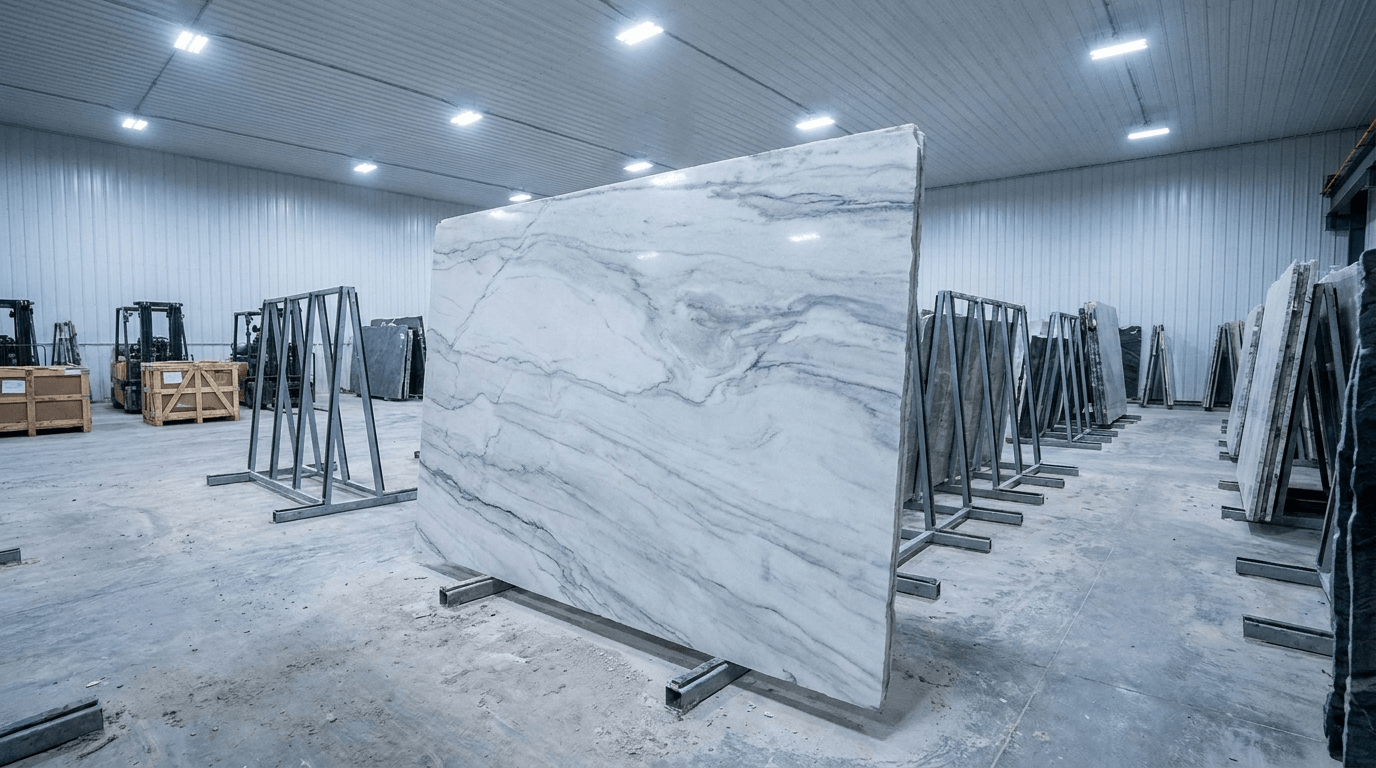
Quartzite is a naturally metamorphic rock — sandstone subjected to heat and pressure until it recrystallises into a dense, hard material. It is frequently confused with quartz (engineered) and sometimes confused with quartzite-finish porcelain. The confusion matters commercially: genuine quartzite is harder than marble (Mohs 7+), significantly more resistant to etching from acids, and available in the soft white and grey vein patterns that designers want as marble alternatives.
| SPECIFICATION WARNING: Quartzite vs quartzite-look porcelain
Multiple stone suppliers label quartzite-look porcelain tiles and slabs as “quartzite finish” or similar — creating genuine confusion at the specification stage. If a client specifies quartzite and your supplier delivers quartzite-look porcelain, you have a material mismatch that will surface on site. Always confirm the material category explicitly — natural quartzite or porcelain slab with quartzite aesthetic — before ordering. |
For commercial projects where the client wants the veined, natural stone look of marble without marble’s vulnerability to etching and staining, quartzite is the correct specification. Properly sealed, it outperforms marble in kitchen, bar, and reception countertop applications without the ongoing maintenance anxiety that marble generates in hospitality and food-service environments.
| Quick answer: Quartzite hardness typically ranges from Mohs 7 to 7.5 — harder than marble (Mohs 3-4) and comparable to granite. It resists etching from acidic cleaners and drinks significantly better than marble in commercial food-service and bar applications. |
The conversation about quartzite is much easier before the fabricator receives the order than after the site manager notices it etches like marble — because it might, if the stone was mislabelled.
| INDUSTRY DATA — NSI (Natural Stone Institute)
The NSI 2025 Natural Stone Industry Report documented a 34% year-over-year increase in quartzite slab import volumes into the US market in 2024, driven primarily by commercial and hospitality project specifications. Brazilian quartzite — particularly Taj Mahal, Super White, and Fantasy Brown variants — accounts for the majority of commercial volume. Source: naturalstoneinstitute.org — 2025 Industry Report |
- The 2026 Colour Shift: Warm Neutrals Replace Cool Greys
The cool grey and stark white countertop palette that defined 2018-2023 has peaked. The 2026 market is moving toward warm neutrals — greiges, taupes, warm off-whites — and natural stone tones with visible mineral character.
This is not a minor design preference shift. For contractors ordering countertops in volume for multi-unit residential or hotel refurbishments, specifying the wrong colour palette in 2026 is a risk that affects project sign-off and resale value. Developers who built the cool grey specification into their 2022 design brief are revisiting it for 2026 projects — sometimes mid-project.
The colour movement is driven by two parallel forces: aesthetic fatigue from the decade-long grey-and-white standard, and a broader interior design trend toward warmth, natural materials, and biophilic spaces. The countertop is a central surface in any interior, and it is absorbing these broader design directions.
The colour trend table below maps the specific colour families shifting in 2026 and where they are being specified.
| Colour Family | Specific Shades Rising | Where Specified | Status |
| Warm neutrals | Greige, warm taupe, cream veined | Residential + hospitality | Dominant 2026 |
| Soft whites (veined) | Ivory, off-white, subtle movement | Hotels, multifamily | Replacing stark white |
| Charcoal / dark grey | Graphite, near-black quartz | Commercial kitchens, bars | Stable strength |
| Green tones | Sage, forest, deep emerald quartzite | High-end residential, boutique hotel | Fast growing |
| Blue-grey | Slate, cool blue-grey quartzite | Coastal commercial, spas | Niche growth |
| All-white (stark) | Bright white no movement | Commodity residential | Declining |
| Bold pattern / exotic | High-drama veining, book-matched | Luxury feature applications | Premium stable |
| Quick answer: The single most common colour specification shift in US commercial and hospitality projects in 2026 is from cool grey quartz to warm greige or cream-toned engineered or natural stone surfaces. |
| Pack Universe Supply — Stock Note
We have seen consistent demand growth for warm-toned quartz and leathered granite in warm cream, greige, and taupe ranges across both our US and Canada customer bases. If you are specifying for a 2026 project and need to confirm available colour stock before committing, contact our team directly. We can verify current batch availability before your order goes in. packuniversesupply.com | +1 704-951-7822 (USA) | +1 (647) 362-1907 (Canada) |
- Large-Format Porcelain — The Countertop-to-Cladding Bridge
Large-format porcelain slabs are the fastest-growing crossover material in the 2026 US market — specified for both countertops and vertical cladding in the same project, eliminating the visual break between surfaces.
Porcelain slab technology has matured significantly in the last five years. Slabs are now available in formats up to 126 x 63 inches with thicknesses from 6mm to 20mm — covering both countertop applications and full-height wall cladding. For a hospitality developer designing a lobby or spa where the countertop flows visually into the wall, a single large-format porcelain in a stone-look finish achieves that continuity without the weight, sealing, or cost of natural stone at scale.
| INDUSTRY DATA — TCNA (Tile Council of North America)
TCNA market data for 2024-2025 showed that large-format porcelain slab imports to the US grew by 28% year-over-year, with commercial project specifications accounting for 61% of the volume. Countertop and countertop-plus-cladding combined specifications were the dominant use case in commercial applications. Source: tcnatile.com — 2025 Market Data Report |
The specification challenge with large-format porcelain is fabrication and handling. Slabs in the 6-12mm range are brittle during cutting and require specialist fabricators with appropriate equipment. Contractors who specify large-format porcelain without confirming fabricator capability before ordering create a real risk of damaged material and project delay. This is the most common source of cost overrun in large-format porcelain projects.
| WARNING: Large-format porcelain fabrication capability
Not all stone fabricators are equipped to cut and install large-format porcelain slabs without breakage. 6-12mm porcelain requires diamond-tipped tooling, specific cutting speeds, and experienced handling. Before specifying large-format porcelain for a project, confirm in writing that your fabricator has the equipment and documented experience for the specific slab format and thickness you are ordering. |
| Quick answer: Large-format porcelain slabs (1200mm x 2400mm and above) require specialist fabrication equipment and handling. Confirm fabricator capability before committing to a specification — fabrication incompatibility is the primary cause of cost overrun in porcelain slab projects. |
The contractor who confirms fabricator capability before the slab arrives on site has a very different project outcome from the one who finds out after.
- Sustainability and Sourcing — The Emerging Specification Requirement
Sustainability credentials are appearing in commercial RFPs and LEED-targeted project briefs with increasing frequency in 2026 — not as a dominant decision factor, but as a gate that materials need to clear.
For most commercial projects, sustainability is not yet the primary countertop specification driver — cost, performance, and aesthetics still lead the decision. But for LEED-targeted projects, ESG-committed developers, and public sector specifications, material sourcing, recycled content, and regional supply chain are now standard questions on the specification form. Contractors who cannot answer them are disadvantaged.
| INDUSTRY DATA — NAHB (National Association of Home Builders)
NAHB’s 2025 Commercial Builder Survey found that 34% of commercial project RFPs included sustainability or ESG-related material criteria — up from 19% in 2022. Among respondents, the most common criteria were regional material sourcing (within 500 miles), recycled content percentages, and supplier environmental certifications. Source: nahb.org — 2025 Commercial Builder Survey |
For stone and surface materials, the practical sustainability questions are: Where is the stone quarried? What is the supply chain length from quarry to site? Does the supplier hold any environmental management certifications (ISO 14001 or equivalent)? For engineered surfaces, what is the recycled content percentage? Pack Universe Supply sources from verified supply chains across North America and can provide sourcing documentation for projects that require it.
| Quick answer: For LEED and ESG-targeted commercial projects, countertop material documentation requirements typically include quarry or manufacturing origin, supply chain distance, recycled content percentage, and supplier environmental certification status. |
| 2026 sustainability rule: Build a standard sourcing documentation package for your most commonly specified materials — origin, supply chain distance, certifications. It takes one hour to prepare and will qualify you for project RFPs that competitors cannot clear. |
| Ready to order 2026-specified stone at wholesale?
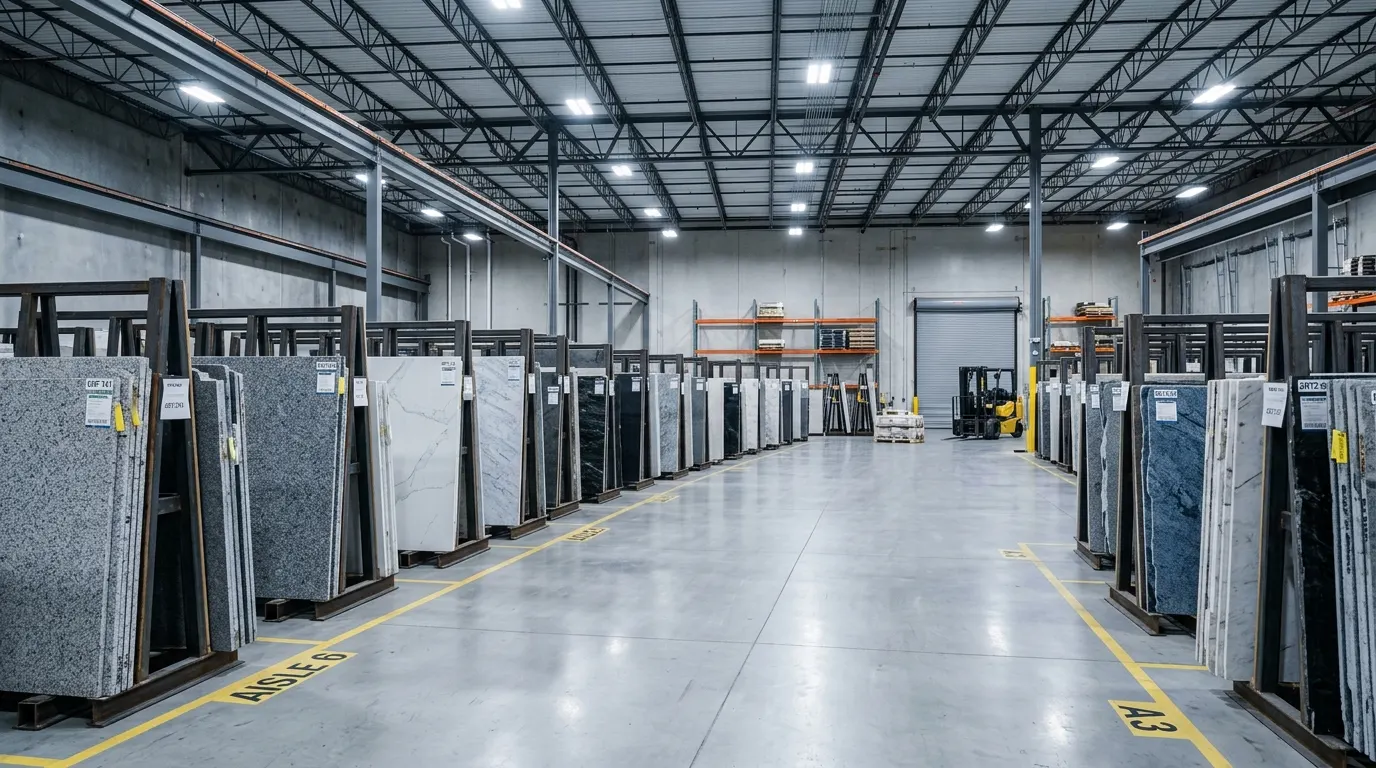
Pack Universe Supply delivers granite, quartz, quartzite, and porcelain slabs direct to contractors and developers across the USA and Canada. Volume pricing. Grade-verified stock. USA: +1 704-951-7822 | Canada: +1 (647) 362-1907 | packuniversesupply.com |
Verdict
| The US countertop market in 2026 is not abandoning quartz — it is diversifying around it, driven by aesthetic fatigue with polished white surfaces and real demand for natural stone character in commercial and hospitality environments.
The materials growing fastest are leathered granite, quartzite, and large-format porcelain — each serving a distinct specification need that polished quartz cannot meet. Contractors and developers who update their specification literacy to cover these materials, their finishes, and their performance characteristics will be better positioned for the commercial project briefs arriving in 2026 and 2027. The specification conversation is where this market is won or lost — and the contractors having it accurately are the ones getting the volume orders. |
Sources & References
NKBA — 2025 Professional Design Trends Report: nkba.org
CBRE — 2025 US Commercial Interior Design Survey: cbre.com
NSI (Natural Stone Institute) — 2025 Industry Report: naturalstoneinstitute.org
NAHB — 2025 Commercial Builder Survey: nahb.org
TCNA — 2025 Market Data Report: tcnatile.com
| Related Guides
→ Which is better for commercial countertops — granite or quartz? LINK: /blog/granite-vs-quartz-commercial-countertops → What are the best wholesale quartz colors for kitchen countertops in 2026? LINK: /blog/best-quartz-colors-kitchen-countertops-2026 → How should contractors compare porcelain slabs vs quartz for large projects? LINK: /blog/porcelain-vs-quartz-2026 → What is the difference between engineered stone and natural stone in 2026? LINK: /blog/engineered-vs-natural-stone-2026 → How do contractors reduce material costs without compromising quality? LINK: /blog/reduce-material-costs-quality |
Sam Michele 15 years of experience supplying wholesale building materials to commercial contractors and developers across the USA and Canada. Pack Universe Supply operates from Charleston SC and Burlington ON, serving builders, fabricators, and project developers with granite, quartz, quartzite, and engineered stone at commercial volume.