Is Engineered Hardwood Suitable for Commercial Projects? A Contractor’s Guide 2026
Is Engineered Hardwood Suitable for Commercial Projects? A Contractor’s Guide 2026
The ultimate 2026 contractor guide to engineered hardwood in commercial use – what commercial environments it fits, what it doesn’t, the 12-application suitability table, veneer thickness and finish requirements, maintenance programme obligations and when SPC is the better specification. Data from NWFA and NAHB all the way.
Is engineered hardwood suitable for commercial projects? What contractors need to know before specifying engineered hardwood.
Engineered hardwood is suitable for a specific range of commercial projects – boutique hotels, luxury BTR, premium co-working, corporate executive spaces and upscale restaurants. It is not suitable for healthcare, education, large format retail or any high volume commercial environment where moisture, heavy loads or aggressive cleaning protocols are beyond what a wood veneer surface can withstand. The specification question is not “can engineered hardwood be used commercially?’ — it’s ‘does this particular application match what engineered hardwood can provide?’
| Engineered hardwood is the right commercial spec when:
Boutique hotel rooms and suites: Real hardwood floor is a quality signal at the boutique level. UV oil finish, with underlayment attached. 3mm veneer min. Luxury BTR apartments – bedrooms and living areas: Real hardwood delivers the premium material quality that justifies the rent premium. Colour must be batch tested to ensure consistency across all units. Corporate executive offices & boardrooms: Hardwood says authority and permanence. UV oil finish for localised maintenance between servicing. Upscale restaurant dining rooms: Warm character. Must be combined with a rigorous maintenance programme – UV oil or lacquered with regular professional servicing. Welness and spa facilities: Aesthetic of natural material as per the spa brief. Low moisture zones only. Do not use in dressing rooms or wet areas. Pack Universe Supply stocks engineered hardwood in commercial grades – verified batch, commercial finish, wholesale contractor pricing. Request a Quote | packuniversesupply.com | +1 704-951-7822 |
Engineered hardwood is commercially fit – for the commercial environments that fit what it can physically provide. The biggest reason for engineered hardwood commercial failures is specifying it outside of those environments.
The wrong question contractors ask most often about engineered hardwood in commercial projects. Can engineered hardwood be used commercially?suggests an answer that is technically yes but dangerously incomplete. The question should be: ‘Is this particular commercial application suitable for what engineered hardwood can provide — in terms of volume of traffic, moisture exposure, maintenance commitment and cleaning protocols?Does that answer hold for a boutique hotel room? (Yes.) A standard mid-range hotel room? (Questionable – think SPC.) A corporate open-plan office? (SPC is better.) A healthcare corridor? (No, definitely not.)
This guide discusses where engineered hardwood works correctly in commercial use, where engineered hardwood does not work correctly and the maintenance obligations that will ensure a correct specification remains correct throughout the service life of the floor. Throughout, NWFA commercial specification guidelines and NAHB developer purchasing data.
- What Engineered Hardwood Can and Cannot Do in Commercial Use
Commercial-grade engineered hardwood must pass three tests rarely applied to residential specs: traffic density, moisture exposure, and compatibility with maintenance protocols.
Engineered hardwood is a man-made wood product made up of a real wood veneer (typically 2mm to 6mm thick) glued to a plywood or HDF core using heat and pressure. The veneer is real wood with the hardness, grain character and natural variation that make hardwood floors desirable. It’s also a natural material with the limitations of natural wood: it can be scratched by sustained commercial traffic, it reacts to moisture by expanding and contracting, and it can’t be cleaned with the aggressive chemical protocols that commercial housekeeping teams use on tile, stone and SPC surfaces.
Per data from the NWFA 2025 commercial specification data, engineered hardwood is specified in 23 percent of commercial flooring specs in premium hospitality — boutique hotels, luxury serviced apartments and upscale dining. That’s less than 3 percent of specs in general commercial uses — office, retail, healthcare — where SPC and commercial carpet rule. The specification pattern reflects where engineered hardwood’s premium character justifies the higher maintenance requirements and where it does not, for commercial applications.
| Short answer:
Engineered hardwood commercial spec rule: floor needs a maintenance programme – UV oil servicing or lacquer refinishing at 12 to 24 month intervals for commercial use. If you are not able to confirm and budget this program before installation on a commercial project, SPC is the right specification for that project. |
| Industry Data:
NWFA 2025 (nwfa.org) – engineered hardwood is 23 percent of commercial flooring specifications in premium hospitality. Average commercial service life to first major refinishing event: 4 to 7 years with UV oil finish and a maintained servicing programme. 67 percent of BTR developers prefer SPC over engineered hardwood for standard-tier apartments, because of maintenance obligation and uncertainty tenant will take care of. NAHB 2025 (nahb.org) 34 percent of premium BTR call for engineered hardwood where the rent premium offsets the maintenance cost. |
| The key thing to keep in mind:
Commercial maintenance is a condition of correct performance, not an optional premium for engineered hardwood. UV oil finish: professional application every 12-24 months. Lacquer finish: full sanding and refinishing every 5 to 8 years. For any commercial project where maintenance program is not confirmed, SPC should be specified. |
The table below, with 12 applications, gives a definitive yes, no or conditional answer for each major commercial application, including the veneer/finish specification and the key note for each:
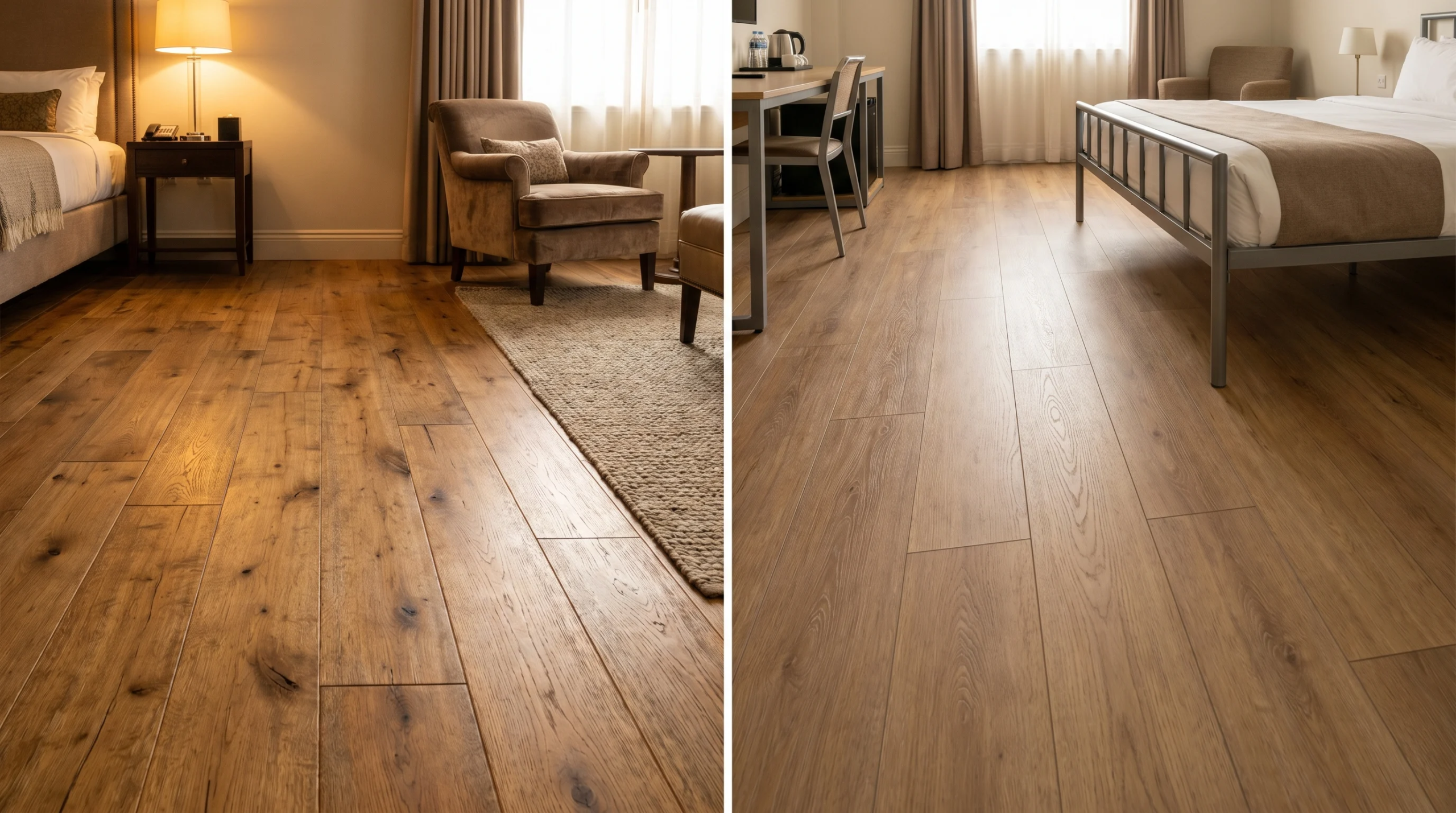
- Engineered Hardwood for Commercial Use – Full Suitability Reference
12 commercial applications tested for engineered hardwood suitability – with a clear specification recommendation, veneer and finish requirements and the key note that determines if the specification is correct for the specific project conditions.
Sure, the three tagged No apps — healthcare, gym and fitness, high-street retail. Engineered hardwood is suitable in these environments as it has no maintenance program, veneer thickness or finish specification. The Consider SPC-labeled applications are honest assessments: engineered hardwood can technically be installed, but SPC offers better durability, lower maintenance cost and equivalent aesthetics at those price points.
| Commercial Application | Suitable? | Veneer / Finish | Key Specification Note |
| Boutique hotel room | ✅ Yes | 3mm+ veneer, UV oil | Material quality signal at boutique tier. Pre-attached underlayment for acoustic comfort. Batch-confirm before full-volume order. |
| Luxury hotel suite | ✅ Yes | 4mm veneer, UV oil or lacquer | Premium specification. Wide plank. Professional servicing programme confirmed with hotel facilities team before specifying. |
| Standard / mid-range hotel room | ⚠ Consider SPC | — | SPC with wood-look is the more appropriate specification at this tier — same aesthetic, zero maintenance, no servicing programme required. |
| Luxury BTR — bedroom and living | ✅ Yes | 3mm veneer, UV oil | Batch-confirmed for colour consistency across all units. UV oil for localised maintenance between tenancies. |
| Standard BTR — any area | ⚠ Specify SPC | — | SPC delivers the wood aesthetic with zero maintenance burden on building management or tenants. Engineered hardwood requires periodic servicing BTR operators typically do not provide. |
| Corporate executive office / boardroom | ✅ Yes | 3mm veneer, UV oil or lacquer | Authority and permanence. Warm character. Professional servicing 1–2 times per year. Not appropriate for open-plan high-traffic areas. |
| Corporate open-plan office | ⚠ SPC preferred | — | High rolling chair loads and daily commercial cleaning — SPC handles these better than a wood veneer surface across a standard 7-year office lease. |
| Premium restaurant dining | ✅ With caveats | 3mm veneer, UV oil | Warm character. Daily commercial cleaning must use pH-neutral hardwood cleaner — not standard restaurant degreasers. Maintenance programme confirmed. |
| Retail — flagship premium | ✅ With caveats | 3mm veneer, lacquered | Premium brand experience. Entrance zone wear is the primary risk — mat-well at entrance essential. Professional refinishing in programme. |
| High-street retail — high traffic | ❌ No | — | Too much traffic variability and commercial cleaning risk. SPC delivers same aesthetic with significantly better durability. |
| Healthcare — any area | ❌ No | — | Aggressive chemical cleaning incompatible with wood veneer surface. SPC or sheet vinyl only. |
| Gym and fitness | ❌ No | — | Moisture from sweat and cleaning. Heavy equipment loads. Engineered hardwood will fail within 2–3 years. SPC or rubber flooring. |
| Fast answer:
Contractors entering hospitality and BTR work need to pay attention to the standard mid-range hotel room and the standard BTR rows. They both say the same thing: SPC is the more appropriate spec at the standard tier. The maintenance programme that engineered hardwood requires in those environments is not one consistently delivered by standard hotel housekeeping and BTR building management. SPC gets rid of the maintenance programme altogether. |
The BTR developer who specifies engineered hardwood throughout 80 standard-tier apartments because it looks better in photos than SPC, has taken on a maintenance obligation that the building management company will not honour. The hardwood will be scratched on the surface, dull in the traffic paths and have moisture marks in the kitchen areas at the 3 year property inspection. The maintenance programme was not done. Now the floor needs professional refinishing in 80 units. SPC would have required nothing.
- Veneer Thickness & Finish – What Contractors Need to Specify for Commercial Use
Commercial engineered hardwood requires a minimum 3mm veneer and a UV oil or aluminium oxide finish – the two specification requirements that determine whether the floor can be maintained through a commercial service life.
Veneer thickness – Why 3mm is the minimum commercially
The thickness of the veneer will dictate how many times the floor may be sanded and refinished before the veneer is exhausted. A 2mm veneer can generally be lightly sanded once – enough for residential use where refinishing occasions are few and far between. A 3mm veneer can survive 2-3 sanding events in its commercial service life. 3-4 events. 4mm or 5mm veneer support. Ideal for longer commercial cycles or where surface wear is accelerated by heavy traffic.
The minimum thickness for commercial use is 3 mm veneer. Any thinner will risk using up the sanding allowance at the first maintenance event, leaving the contractor or building owner with a floor that cannot be refinished without being completely replaced. Look at the veneer thickness in mm from the supplier datasheet – not wood wear layer claims that may include core material in the measurement.
Finish: UV Oil vs Lacquer for Commercial
In 2026, UV oil finish is the preferred commercial finish for engineered hardwood. It soaks into the surface of the wood, rather than forming a film on top – allowing localized repairs and buffing in between full servicing cycles. A scratch in a UV oil finish can be repaired with a spot application of matching oil, rather than sanding the entire floor. If the finish is lacquer, a scratch will have to be sanded back to the bare wood in the area of the scratch. UV oil is critical for reducing the cost of maintenance intervention in commercial applications where localized damage between full service events is prevalent.
The lacquer finish is appropriate for low-traffic commercial applications such as boardrooms and private offices where there is less chance of localised damage to the floor and the full sanding cycle every 5 to 8 years is achievable. Aluminium oxide reinforced finishes are available for improved scratch resistance over standard lacquer – for applications where a premium look is required and professional servicing is less frequent.
| Brief answer:
Commercial engineered hardwood spec: 3mm veneer minimum, UV oil finish for most commercial applications, aluminium oxide reinforced where scratch resistance is required. Check veneer thickness in mm on datasheet, not what manufacturer says. Lacquer can’t be used for localised spot repairs, UV oil can. |
| This limitation was discovered during the 18 month maintenance inspection of the commercial project specifying engineered hardwood with 2mm veneer and lacquer finish. The lacquer was scratched in the area of the office entrance. We had to sand back to the bare wood. The 2mm veneer was partially consumed in the process. One floor that should have had two more sanding cycles available. The 3mm veneer with UV oil conversation is 5 minutes before the order.
Considering engineered hardwood for a commercial project? Tell us your commercial application, traffic level and maintenance programme and we will be able to confirm if engineered hardwood or SPC is the right specification and give you a confirmed wholesale quote. +1 704-951-7822 | packuniversesupply.com/request-a-quote |

- Maintenance Programme Is the Condition for Commercial Success
A commercial engineered hardwood floor with no stated maintenance plan will fail between 3 and 5 years regardless of veneer thickness or quality of finish. The maintenance programme is not an optional service, it is a condition for correct specification performance.
Commercial applications of UV oil finish require professional buffing and re-oiling once a year. This does not mean the floor is sanded each year. It means a professional applies a compatible oil to the surface, buffs it in and restores the protective oil layer that daily commercial use depletes. It takes 2 to 4 hours for a typical commercial space. It extends the service life of the floor between full sanding events from 4 years to 7 to 10 years
The hotel’s facilities management team must confirm the hotel room maintenance programme before specification. BTR apartments require verification by the building management company or owner. For corporate offices, it must be incorporated into the building’s maintenance schedule and budgeted into the facility management budget. If any of these confirmations are not obtained before installation, the maintenance programme will not be consistently delivered – and the floor will deteriorate at the rate of a non-maintained floor, not a maintained one.
Annual: professional UV oil buff and re-oil — commercial spaces 2 to 4 hours. Restores the oil layer worn out by the daily traffic and cleaning. Increases time between full sandings.
- Every 5 to 8 years: full sanding and refinishing – UV oil finish Removes wear and scratches on the surface from the period of service. Restores the floor to near original condition. Needs veneer 3mm+.
- Every 8-12 years: full sanding and refinishing – lacquer finish Less frequent maintenance than UV oil, but more extensive intervention when required. More disruptive to commercial operations.
- Cleaning protocol – only daily use of pH-neutral hardwood floor cleaner. No commercial degreasers, no alkaline cleaners, no steam cleaning. Chemicals that don’t mix speed up finish breakdown between servicing events.
| ⚠ Real Risk – Real Consequence:
The risk: specifying commercial engineered hardwood without establishing a maintenance programme with the building operator prior to installation. The result: Without annual UV oil maintenance, the finish deteriorates within 2 to 3 years in commercial traffic. “Surface scratches and dullness develop. The floor needs to be fully sanded and refinished before the normal cycle — at full commercial disruption and at material cost. A floor that’s supposed to last 7 years only lasts 3. |
The pre-specification maintenance programme conversation is a two minute question. ‘Does this building have a facilities management programme that will deliver annual UV oil servicing on this floor?‘If yes, then engineered hardwood is the right specification.’ If unsure or no, state SPC. The question is free to ask. The answer sidesteps the most expensive conversation in commercial flooring: why is the hardwood floor deteriorating on a building that doesn’t have a maintenance program.
| Short answer:
Verify the maintenance programme before specifying commercial engineered hardwood. Annual UV oil for commercial use. Only pH neutral cleaning products. NO steam cleaning NO commercial degreasers If the programme can not be confirmed – specify SPC. Looks the same, but without the commitment to maintain it. |
| How Pack Universe Supply supports commercial engineered hardwood orders:
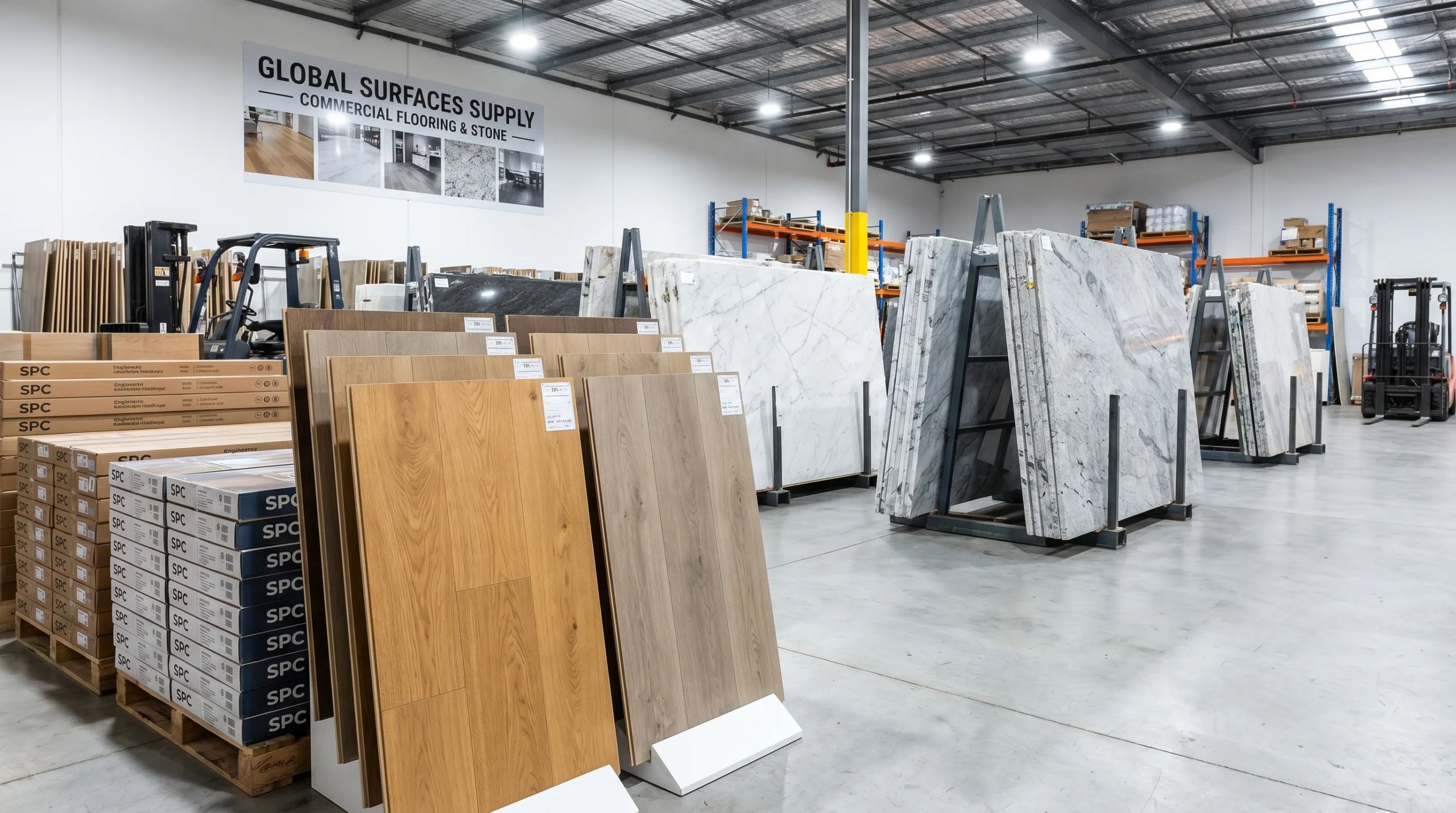
Pack Universe Supply has commercial grade engineered hardwood, 3mm/4mm/5mm veneer with UV oil and lacquer finish options in our warehouse in Charleston, SC. For commercial engineered hardwood orders, we confirm veneer thickness from the manufacturer datasheet, recommend finish selection for the specific application and provide batch confirmed samples prior to full volume orders shipping. For contractors choosing between engineered hardwood and SPC for a commercial project: Call us with the application details and maintenance programme status and we will give you a direct recommendation based on the specific project conditions. Call +1 704-951-7822. Wholesale Commercial Engineered Hardwood – No Minimum First Order 3mm, 4mm and 5mm engineered hardwood veneer in UV oil or lacquer finish. Batch confirmed commercial grades. Charleston SC (USA) | Burlington ON (Canada) | Nationwide shipping. → Request a Quote: packuniversupply.com/request-a-quote → Phone: +1 704-951-7822 (Mon-Fri, 8am-5pm EST) Canada: +1 (647) 362-1907 | WhatsApp: button on packuniversesupply.com |
Verdict – Engineered Hardwood and Commercial Projects
Decision:
Yes – in boutique hotels, luxury BTR, premium co-working, corporate executive areas and upmarket restaurants where the brief has specifically called for real wood character and where a maintenance programme can be confirmed and budgeted for.
No – in healthcare, education, high street retail and gyms. These environments involve moisture, chemical cleaning or load conditions that engineered hardwood cannot withstand over a commercial service life .
Use SPC for standard hotel rooms, standard BTR, corporate open-plan or any application where the maintenance programme cannot be guaranteed. SPC offers similar wood looks without the maintenance commitment.
The question is not whether engineered wood is good enough. The question is whether the application and building maintenance program is good enough to support what engineered hardwood requires.
Sources & References
NWFA – National Wood Flooring Association, Commercial Specification Guidelines 2025. nwfa.org NAHB – Developer Purchasing Survey 2025. nahb.org Pack Universe Supply commercial contractor order data, April 2026.
About the Author
Sam Michael 15 years of direct experience in providing engineered hardwood for commercial projects in the USA and Canada. Pack Universe Supply has wholesale warehouse locations in Charleston, SC (USA) and Burlington, ON (Canada).