
How US Stone Import Tariffs Affect Contractor Prices in 2026 — A Practical Guide
How US Stone Import Tariffs Affect Contractor Prices in 2026 — A Practical Guide
The 2026 US stone import tariff cheat sheet for contractors – which origin countries face higher tariffs, how Section 301 tariffs affect Chinese and Vietnamese stone, what the suspension of GSP means for Indian granite prices, the 8-origin tariff reference table, three ways to protect contractor budgets, and how to request tariff-inclusive quotes before confirming any stone order. NSI and USITC data as follows.
What will US stone import tariffs do to contractor prices in 2026 and what can contractors do about it?
Since 2018, US tariffs on imported stone — mainly from China and India — have added a quantifiable cost layer to the wholesale price of granite, marble and engineered stone. Chinese-origin stone faces higher Section 301 tariffs in 2026, while Indian granite and marble have their own tariff schedule that has moved with trade talks. For contractors, the practical effect of this is that the quote price for imported stone is the base cost from the supplier plus the layer of the tariff on top of it. Contractors that know the tariff rates for different origin countries can set alternate origins, request tariff-inclusive quotes and avoid budget surprises halfway through a project.
| What shields contractor budgets from tariff exposure? Three things:
Ask for origin country on every quote: Stone quotes should include the country of origin. Without it, the tariff exposure is unknown until the import paperwork arrives. Request tariff-inclusive pricing: Ask suppliers to confirm that the quote they are giving you includes all applicable tariffs. Some FOB quotes don’t include tariff – which then appears at customs. Identify alternate origins with high tariff risk: Alternatives to Chinese-origin stone from Turkey, Brazil and Europe are available at equivalent grades for most common Chinese-origin products. Check with the supplier before finalising the project specification. Pack Universe Supply offers origin confirmed, tariff included wholesale quotes so there are no surprises with tariffs after the order is placed. Call +1 704-951-7822 | request a quote at packuniversesupply.com |
“The supplier has nothing to do with import tariffs on stone – that’s a contractor problem. It’s in the final price and the contractor has already told the client what the stone is going for.
The US stone import tariff landscape in 2026 is a result of trade policy decisions made over several administrations since 2018, including Section 301 tariffs on Chinese-origin goods, the suspension of GSP preferences for Indian exports, and subsequent trade adjustments that shifted some Chinese-origin stone production to Vietnam and other third countries before tariff authorities closed that pathway. What this means in practice is that contractors ordering stone pay a layer of cost added to the supplier’s basic wholesale price that varies widely by origin of stone — from zero for domestically quarried stone to elevated rates for Chinese-origin products.
This guide explains the tariff structure for stone in practical terms, flags the riskiest origins and gives contractors three actionable steps to protect their project budgets from tariff surprises from quote acceptance to material delivery.
- Tariffs: Why They Matter More to Contractors than Suppliers
Not always is it clear if the quote from a wholesale stone supplier includes the applicable import tariff – and the difference is only revealed on the invoice if the contractor didn’t ask the right question at quote stage.
When a stone supplier quotes a price, that price is the supplier’s landed cost plus their margin. If the supplier has paid the tariff on imported stone in their US warehouse, the tariff is baked into the price, so the contractor sees one number and the tariff is not visible. When a supplier quotes for material not yet imported or quotes on a FOB basis from an overseas source, the tariff may not be separately listed or may not be listed at all. It may appear at the customs stage as an additional cost that the contractor had not budgeted.
The risk is focused on direct import orders, large project orders for which the contractor arranges the import freight themselves, and suppliers quoting FOB origin terms from overseas warehouses. Tariff inclusive pricing is the norm for reputable domestic wholesalers for the typical in-warehouse transaction. But not all suppliers are as upfront about whether tariffs are included, and contractors who don’t ask are vulnerable.
| Fast answer:
The question that must be asked of every stone quote that involves imported material. Is this price tariff inclusive? Does it include all applicable US import duties?’ If the answer is yes and confirmed in writing, nothing more to do. If the answer is no or uncertain, calculate the tariff and add it to the budget before accepting the quote. |
|
Industry data
USITC (usitc.gov) – The current trade regime means that Section 301 tariffs on Chinese-origin goods, including processed stone products, continue through 2026. Rates on stone HTS codes have been reviewed and adjusted. Check current rates through USITC Harmonised Tariff Schedule for specific product codes. The Natural Stone Institute has been monitoring the tariff impact on stone pricing since 2018. NSI (naturalstoneinstitute.org) According to NSI, the Section 301 tariff on dimensional stone from China added 15 to 25 percent to the landed cost of affected products, resulting in significant specification volume shifting to alternatives from Brazil, Turkey and India. The one thing to remember is: At quote stage the tariff question is one sentence: “Is this price tariff inclusive?“Any good stone supplier will tell you that. If the answer is not obvious and in writing ahead of the order the project budget may be subject to an unknown cost exposure that only becomes apparent at the invoice or customs stage. |
The 8-origin tariff reference table for each major stone import origin — tariff type, 2026 status, and the practical implication for contractor ordering decisions:
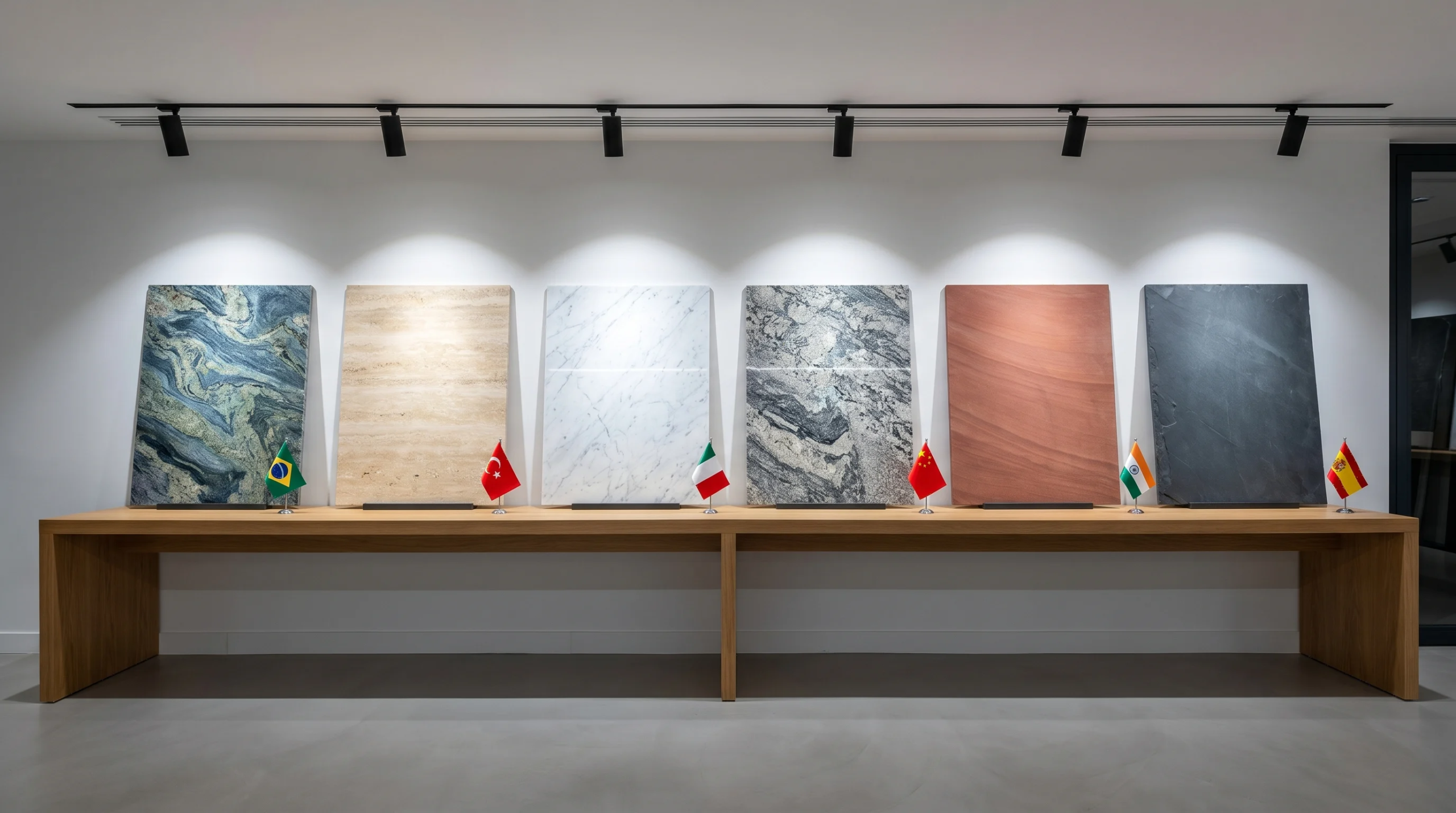
- 8-Reference for the Tariff of the Origin Stone: What Contractors Need to Know
Eight major stone import origins — from China and India to Brazil, Turkey, Italy and domestic USA — with current tariff status, 2026 rate notes and the practical implication for each contractor’s ordering decision.
The table shows the tariff landscape as of April 2026. Tariff rates for particular HTS codes may be affected by trade negotiations, exclusion requests, and policy changes. Contractors who will be ordering large volumes of imported stone should verify the current rate for the product code in the USITC Harmonized Tariff Schedule before committing to project budgets. The below is guidance on the general pattern – not a legal tariff advisory.
| Stone Origin | Primary Tariff | 2026 Status | Contractor Implication |
| China — granite, marble, engineered stone | Section 301 tariffs — elevated rates on processed stone products | Active. Rates remain elevated under current trade framework. Subject to change with trade negotiations. | Chinese-origin stone carries a significant tariff layer on top of supplier base cost. Always request tariff-inclusive pricing. Consider Turkish, Brazilian, or domestic alternatives for cost-sensitive projects. |
| India — granite, sandstone, marble | GSP (Generalised System of Preferences) — suspended since 2019; standard MFN tariff applies | Standard MFN tariff applies. India has not regained GSP status as of April 2026. Monitor trade updates. | Indian granite and marble are more tariff-exposed than pre-2019. Price comparison with Brazilian or Turkish equivalents is worthwhile on large orders. |
| Italy — marble (Carrara, Calacatta, Statuario) | Standard MFN tariff — historically low. No Section 301 or GSP complication. | Standard tariff applies. No elevated rate. Italian marble tariff exposure is lower than Chinese or Indian. | Italian marble quotes are more predictable in tariff terms than Asian-origin stone. Tariff risk lower but shipping distance adds freight cost vs. Asian origins. |
| Brazil — granite, quartzite | Standard MFN tariff — historically low. | Standard tariff applies. Brazilian quartzite and granite have become preferred alternatives to Chinese-origin stone specifically because of tariff predictability. | Brazilian quartzite is the strongest alternative specification to Chinese-origin granite and engineered stone for contractors seeking to reduce tariff exposure. Grade parity is strong. |
| Turkey — marble, travertine | Standard MFN tariff — low. Turkey is a net exporter to the USA with no elevated tariff schedule. | Standard tariff applies. Turkish marble and travertine are competitively priced at the tariff-inclusive level. | Turkish travertine and white marble are strong alternatives to Italian and Chinese-origin marble for price-sensitive projects. Confirm grade parity before substituting. |
| Vietnam — engineered stone (quartz surfaces) | Section 301 tariffs applied to Vietnamese-origin engineered stone — following diversion from China. | Active. Vietnamese-origin engineered stone carries elevated tariffs similar to Chinese-origin products. Confirm origin carefully on engineered stone quotes. | Vietnamese-origin quartz may appear on supplier quotes as an alternative to Chinese-origin. Tariff exposure is similar. Request origin documentation before accepting any engineered stone order. |
| Spain — marble, granite, porcelain | Standard MFN tariff — low. | Standard tariff applies. Spanish porcelain and stone are competitive at tariff-inclusive pricing. | Spanish porcelain slabs (Coverings Extravaganza, etc.) carry low tariff exposure and are a strong alternative to Chinese-origin porcelain slabs. |
| Domestic USA — granite, marble | No import tariff — domestically quarried stone. | Domestic quarries in Georgia, Vermont, South Dakota, and Texas supply granite and marble. Limited range vs. import but zero tariff exposure. | Domestic stone is the zero-tariff option. Limited product range and higher extraction cost in some grades but no tariff uncertainty. Worth considering for budget-sensitive standard grades. |
Tariff data based on USITC Harmonised Tariff Schedule and NSI stone trade data, April 2026. Rates subject to change. Verify specific HTS codes before committing project budgets.
| Short answer:
The two origin countries that will require the most attention in 2026: China (Section 301 elevated tariff – confirm inclusion on every Chinese-origin quote) and Vietnam (elevated tariff on engineered stone – Vietnamese-origin quartz carries similar tariff exposure to Chinese-origin after anti-circumvention determinations). For most standard stone grades, there are Brazilian and Turkish alternatives, which are the lowest-tariff imported options. The contractor who accepted a competitive wholesale quote for Chinese-origin granite on a FOB-Shanghai basis only to find that the Section 301 tariff was not included, has a budget problem that the competitive price didn’t solve. The tariff is a fixed percentage over the declared value — it doesn’t go away just because the quoted stone price was enticing. The tariff question at the quote stage is one sentence. Mid-project budget revision conversations take considerably more. |
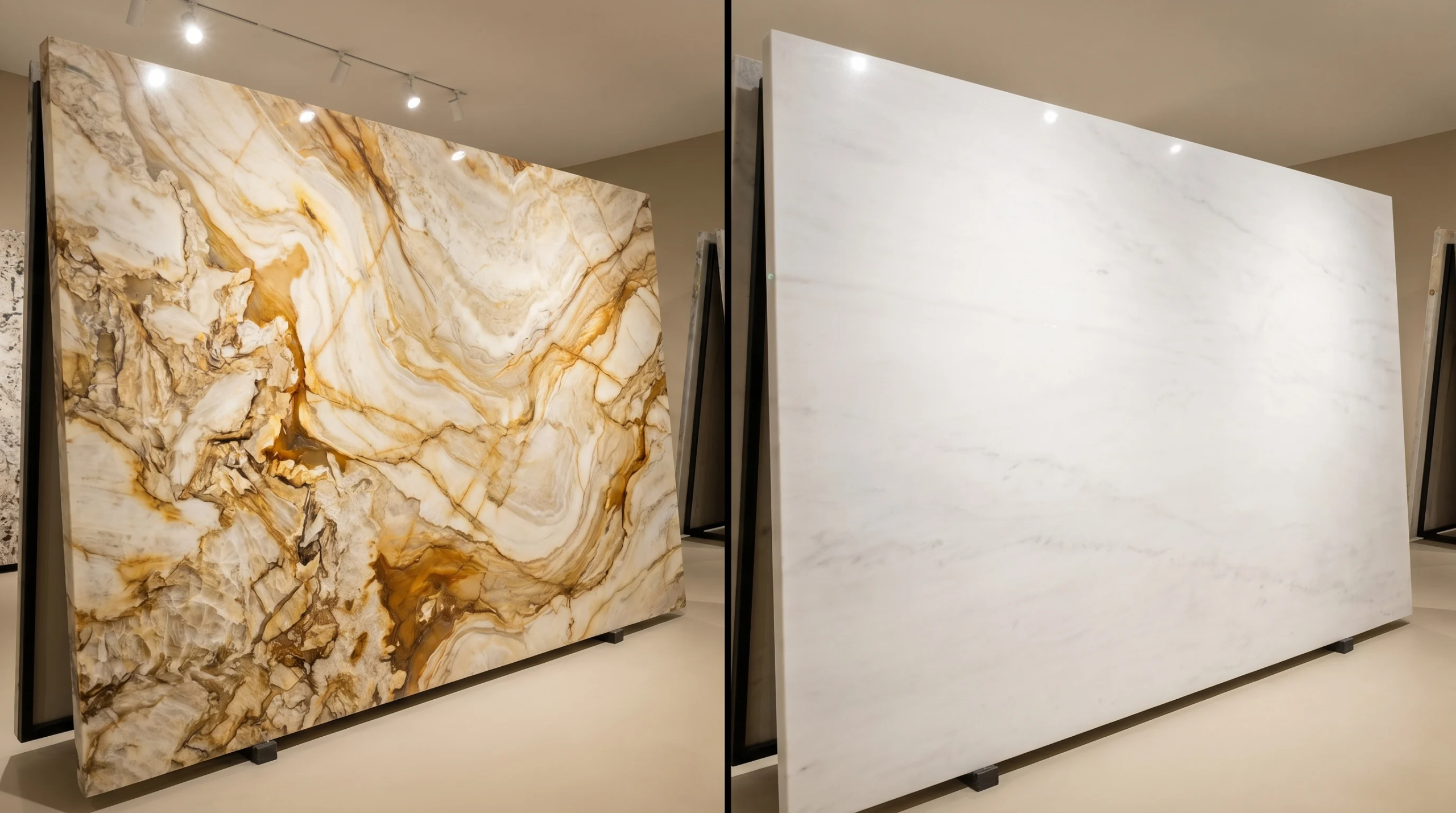
- Brazilian and Turkish Stone – The Practical Choice for Tariff-Sensitive Orders
For contractors looking to reduce tariff exposure without sacrificing grade or aesthetics, Brazilian quartzite and granite, and Turkish marble and travertine are the two strongest alternative specifications to Chinese and Indian-origin stone.
Brazilian quartzite has become one of the most specified premium natural stone materials in the USA over the past five years – partly because of its amazing visual character (dramatic veining in whites, golds and blues that rival Calacatta marble) and partly because its tariff exposure is lower than Chinese-origin engineered stone or Indian-origin granite at standard grade levels. Brazilian granite and quartzite are subject to standard MFN tariff rates, making them far more predictable in budget terms than Section 301-affected origins.
Turkish marble and travertine are subject to normal MFN tariff rates and are competitively priced at the tariff inclusive level versus Italian marble and Indian granite. Turkish white marble (Afyon White, Thassos-equivalent grades) is a strong alternative to Italian Carrara in hotel bathrooms and commercial vanity applications where the price differential between the two at the tariff inclusive level is material for large volume orders.
Origins Substitution Before Grade Parity Check
When swapping out a Brazilian or Turkish product for a Chinese or Indian-origin specification, check grade parity on three factors: background color and tonal range (natural stone varies by quarry), veining character and density (no two quarries produce identical patterns) and slab dimensions (standard slab sizes vary between quarrying regions). Before a substitution is approved, a physical sample of the proposed alternative origin is a must for residential and boutique hospitality projects where the stone is a design feature. In normal commercial grades, where colour consistency throughout a development is more important than the character of individual slabs, batch confirmation from the alternative origin supplier is a safeguard against tonal variation.
| Short answer:
Before replacing a tariff affected product with an alternative origin, request physical samples of the confirmed lot, compare background colour and veining character to the original specification, and confirm slab dimensions are adequate for the project layout. The same grade on paper does not ensure the same visual grade in the installed project. |
The project that substituted Italian Carrara marble with Turkish white marble to reduce tariff exposure discovered on delivery that the Turkish white had a slightly warmer, creamier tone than the cool white Carrara specified in the design documents. Both are of white marble. They are not the same kind of white. It’s cheaper to have the substitution conversation with the client when it happens with samples before the order than it is when it happens with installed stone after the order.
Are you ordering stone for a current project?
Let us know your preferred stone and origin and we will confirm the tariff inclusive price, find lower tariff alternatives of equivalent grade and give you a confirmed wholesale quote.
Tel +1 704-951-7822 | packuniversesupply.com/request-a-quote
- Three Ways to Protect Contractor Budgets from Tariff Risk
Three specific questions and actions that remove the most common tariff surprises between quote acceptance and project delivery, for every stone order with imported material.
Action 1 – Request Country of Origin on Every Quote
The country of origin must be included for each line item with a stone quote. Without it the contractor cannot assess the tariff exposure of the quoted material. If the country of origin is not stated in the supplier’s quote, request the information in writing prior to accepting the quote. If a supplier refuses to provide origin documentation, treat them with caution – origin is a standard customs declaration all genuine importers have.
Action 2 – Request written confirmation that Tariffs are inclusive
The one thing a contractor can do to best protect against tariff surprises is to add one sentence to every stone quote request: “Please confirm that this price is tariff-inclusive and includes all applicable US import duties.” A reputable domestic wholesaler that stocks stock in a US warehouse can confirm this without qualification — the tariff was paid at import and is embedded in the price. A supplier bidding on a FOB basis from an overseas source may not include the tariff in the headline price. Written confirmation removes any ambiguity before the order rather than after it.
Action 3 — Create a tariff contingency for phased or long lead orders
For large development orders or projects with long procurement cycles, the tariff rate applicable at the time the stone ships may be different from the rate applicable when the quote was accepted. Trade policy can change — tariff rates have been changed many times since 2018 If a project has a stone delivery date greater than 60 days from the date the quote is accepted, and the material is coming from a tariff-affected country, build a 5 to 10 percent tariff contingency into the project budget. This is not pessimism – it is the same risk management any experienced procurement team would apply to imported materials in an active trade policy environment.
| Real Risk – Real Consequence:
The risk: you accept a nice per-sqft stone quote from a supplier quoting FOB-origin from China with no tariff, and then discover the Section 301 tariff on the order after the stone has shipped. The result: an added cost of 15 to 25 percent above the price quoted at the customs or freight invoice stage – after the project budget was set and the client was given a price. The order is one sentence after the tariff confirmation question. The budget revision talks are much, much longer. |
| Short answer:
Three-action tariff checklist for each stone order with imported material: country of origin on quote? Confirmed in writing? Tariff inclusive? Contingency budget for phased or long-lead orders for tariff impacted origins? All three before you make the order. Any supplier that cannot meet the first two points will require further clarification before the order is confirmed. |
This section contains three questions that do not require any tariff expertise to ask. They need one sentence each. The contractor that asks them once on every imported stone quote will never get the customs invoice surprise. The contractor who accepted an all-inclusive quote because it looked like a good deal would have to bear it at least one time and one time is enough to make tariff confirmation a standard part of the quote review process.
How Pack Universe Supply manages tariff exposure on contractor orders:
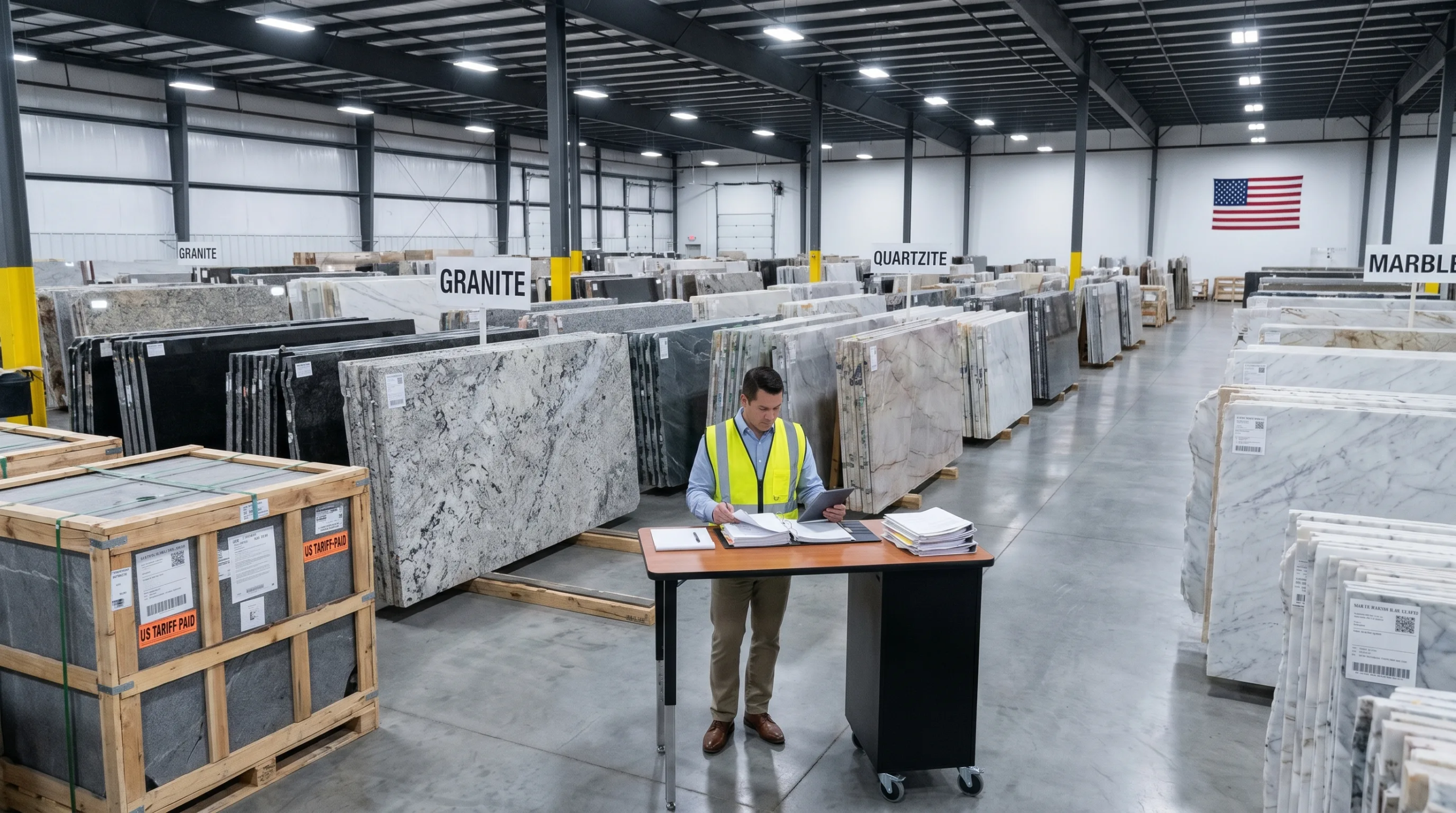
Pack Universe Supply has a stone inventory in our Charleston, SC and Burlington, ON warehouses – all tariff paid at point of import. All quotations from our warehouse stock are tariff inclusive and this is acknowledged in writing on every order.
For origin sensitive programs: We identify the country of origin of each product in our inventory, suggest lower tariff alternatives at the same grade, and flag products where tariff exposure should be considered in the specification decision.
We discuss tariff contingency budgeting with contractors for large phased orders before the order is placed, not after the stone has shipped.
Call: (704) 951-7822.
Order Confirmed, Tariff-Inclusive Wholesale Stone – No Budget Surprises:
Granite, quartz, marble – Country of origin declared, confirmed in writing, tariff inclusive, and where appropriate, alternative country of origin identified.
Charleston SC, USA Burlington ON, Canada
-> packuniversesupply.com/request-a-quote | Phone +1 704-951-7822
Verdict: The Impact of US Stone Import Tariffs on Contractor Pricing in 2026
Verdict:
Section 301 tariffs on stone from China remain at their 2026 levels and are the highest tariff exposure in the US stone import market. Anti-circumvention findings leave Vietnamese-origin engineered stone with similar tariff exposure GSP suspension means stones from India are now being charged standard MFN rates. Standard low tariff rates apply to stone originating in Brazil, Turkey, Italy and Spain.
Practical protection is three questions at quote stage: Confirmed country of origin? Tariff inclusive confirmed in writing? Contingency for staged orders from tariff affected origins? All three before the order was made.
The contractor that applies these three questions on every imported stone quote will never have a tariff surprise at the invoice stage. The stone market does not leave room for second chances on a budget that was set without the tariff layer.
Sources & Reference
USITC – Harmonised Tariff Schedule, Section 301 tariff information: usitc.gov | NSI – Natural Stone Institute, Trade Policy Updates: naturalstoneinstitute.org | Pack Universe Supply import and supply data, April 2026.
Related Guides:
How to read a wholesale stone quote – what each line item means
Why stone projects go over budget – and how to avoid it
-> Finding a good wholesale stone supplier in the USA
Calacatta vs Carrara marble – what you need to know before ordering, contractors
About the Author
Sam Michaele 15 year pf experience we have been importing and wholesaling stone to contractors all over the USA through numerous tariff cycles.